
Buckthorn
Rhamnus cathartica L.
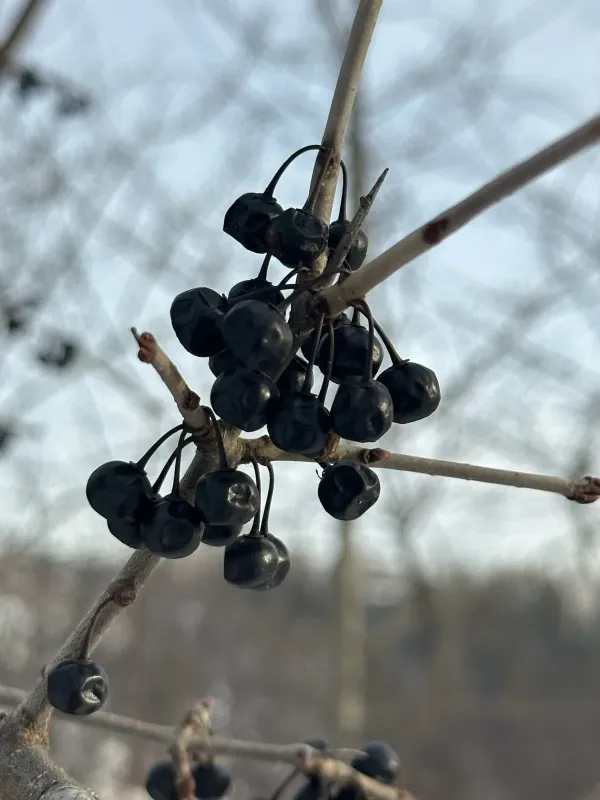
Description
Sowing dates
Propagation of Buckthorn (Rhamnus cathartica) is primarily carried out through seeds or vegetative methods. Seeds require a long stratification period at low temperatures, lasting up to 3–4 months; therefore, sowing in open ground is best performed in the autumn.
For spring sowing, seeds must undergo scarification and artificial stratification in sand or peat. Planting depth is generally between 1.5 and 2.5 centimeters, depending on the soil type and substrate density.
For commercial cultivation, one-year-old nursery-grown saplings are often used. These should be planted during the dormancy period, either in early spring or late autumn, accounting for the spreading crown structure of the mature shrub.
An optimal planting distance between plants in a row ranges from 1.5 to 2 meters to ensure adequate light for each specimen. Row spacing is typically kept at about 3 meters to facilitate equipment movement.
Buckthorn belongs to the Rhamnaceae family and is a deciduous shrub that adapts well to transplantation. Rooting of the saplings is usually successful if regular watering is maintained during the first year after planting.
Growing requirements
The crop has moderate requirements for growth conditions, known for its high frost resistance and ability to withstand significant temperature fluctuations. The plant prefers well-lit areas, although it can tolerate light shading.
Buckthorn is demanding regarding soil fertility, preferring loamy soils with adequate calcium content. It tolerates acidic or waterlogged soils very poorly; therefore, proper drainage is a prerequisite for producing high-quality raw material.
In its natural habitat, Buckthorn is found on forest edges, slopes, and among thickets of other shrubs. Its native range covers much of Europe, as well as regions in Western Asia and North Africa.
The climate plasticity of Buckthorn allows it to thrive in temperate zones. However, during periods of prolonged drought, young plantings require supplemental irrigation despite the plant's developed root system.
Cultivation practices include systematic loosening of the tree trunk circles to ensure oxygen access to the roots. Applying organic fertilizers once every two years significantly enhances productivity and biomass growth.
Yield
The commercial use of Buckthorn focuses on harvesting ripe fruits, which possess well-documented medicinal properties. Yield depends on the age of the shrub, lighting conditions, and the level of agronomic care provided.
Significant fruit production usually begins around the 4th to 6th year of the shrub's life. In commercial settings, harvesting is done manually, as the berries ripen unevenly and require careful handling to maintain quality.
Average yield from a single mature shrub ranges from 2 to 5 kilograms of fresh berries. With optimal planting density, the dry matter yield per hectare can reach several centners.
Buckthorn fruits contain anthraglycosides, flavonoids, and pectins, making them a valuable component in the pharmaceutical industry. Beyond medicine, the plant serves as a honey plant, providing bees with early-season nectar.
Buckthorn wood is known for its hardness and density, making it useful for decorative purposes, small carpentry items, or for producing high-quality charcoal.
Main diseases and pests
The primary diseases of Buckthorn are fungal infections, such as leaf rust, which can significantly weaken the plant during periods of high humidity. Prevention consists of timely sanitary pruning of affected parts.
Among pests, leaf-eating insects and aphids pose the greatest threat. Heavy infestations can significantly stunt the growth of young saplings, negatively impacting future berry yields.
It is important to note that Buckthorn can serve as an alternate host for certain rust fungi that affect cereal crops. Therefore, it is not recommended to establish plantations in close proximity to oat fields.
To control pests in commercial plantings, authorized biological preparations and insecticides are used during the early growth phases. Chemical treatment during the period of active berry ripening is strictly prohibited.
Regular monitoring of bark and shoot conditions allows for the identification of disease symptoms at early stages. Removing infected branches and destroying them immediately helps prevent the spread of infection throughout the plantation.
Harvesting
Harvesting Buckthorn fruits is conducted when they reach full biological maturity, indicated by the berries turning a characteristic black color. This period typically occurs in September and early October.
Harvesting is performed exclusively in dry weather, as wet berries spoil very quickly and lose their medicinal properties during storage. Unripe red berries are unsuitable for harvest due to their high content of toxic compounds.
After collection, the fruits must be cleaned of stalks and debris. Drying is performed in well-ventilated rooms or in specialized dryers at temperatures not exceeding 50–60 degrees Celsius.
Properly dried material has a specific aroma and a bitter-sweet taste. Finished products are stored in paper bags or wooden crates in a dry, cool place, protected from direct sunlight.
The shelf life of the dry raw material is up to 3–4 years if stored correctly. Regular inspections for mold and pests are mandatory to ensure the quality of the products supplied to pharmaceutical enterprises.