
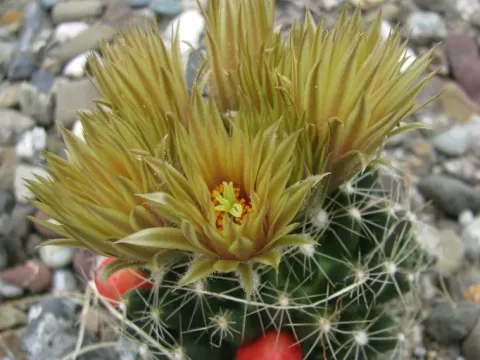
Escobaria
Escobaria
Escobaria is a genus of small, clustering cacti belonging to the Cactaceae family. These plants are native to the diverse landscapes of North America, ranging from the arid regions of Mexico and the United States to the cold climates of Canada.
What the section contains

Escobaria
Cultivation of Escobaria requires high levels of solar exposure to maintain compact growth and intense spine coloration. In an indoor setting, an unobstructed southern exposure is ideal for ensuring the plant receives adequate light.
The growing medium must be highly porous and inorganic. A professional cactus mix, amended with extra pumice or coarse grit, is essential to prevent moisture retention and ensure proper root health.
Temperature requirements vary significantly with the seasons. During the summer, these plants thrive in warm temperatures with good ventilation, while winter requires a cool, dry dormant period to mimic their natural habitat.
Watering practices are critical for the longevity of the plant. During the active growing season, deep but infrequent watering is recommended, while the soil must be kept completely dry throughout the dormant winter months.
Root rot is the most common health issue affecting Escobaria, almost always caused by improper drainage or excessive watering. Once the roots are compromised, recovery is difficult and often requires aggressive pruning and repotting.
Spider mites are a prevalent pest that can colonize the plant during hot and dry conditions. They suck the sap from the plant's surface, creating unsightly scarring that does not disappear even after the pest is eradicated.
Mealybugs are another common nuisance, often found tucked between the tubercles and spines. Early detection is key, and they can be managed with targeted applications of contact insecticides or alcohol-based treatments.
Fungal infections can manifest as dark spots on the epidermis, often a result of poor ventilation or high humidity levels. Improving air circulation and applying copper-based fungicides can help stabilize the infection.
To keep the plants thriving, maintain a strict schedule of observation and seasonal maintenance. Always ensure that the growing environment is cleaned of debris, which can harbor pests and mold spores.