
Escallonia Iveyi
Escallonia x iveyi E. Thurst.
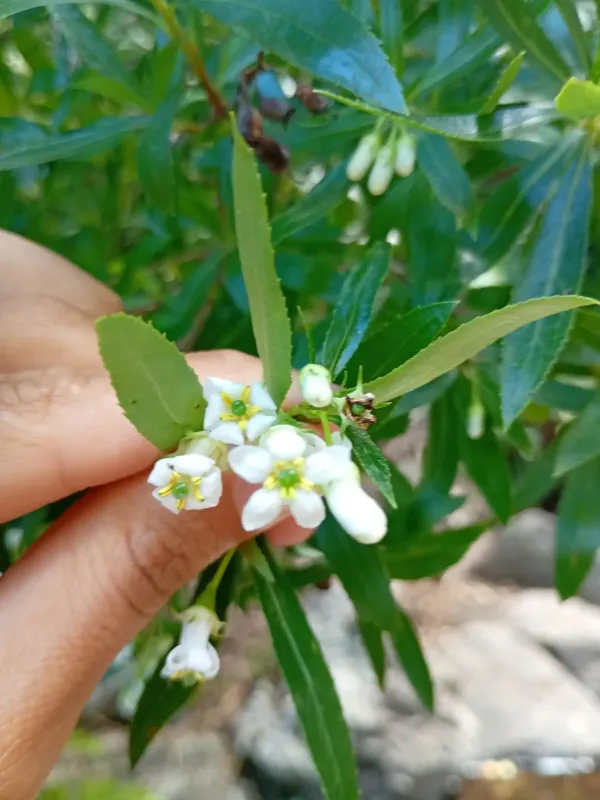
Description
Growing requirements
Escallonia Iveyi is a vigorous evergreen shrub belonging to the Escalloniaceae family. It is a highly valued hybrid, recognized for its glossy, deep green foliage and its profusion of fragrant, white flowers that bloom during the summer months.
The plant thrives in a sunny, sheltered position, ideally protected from harsh, drying winds. While it is relatively hardy, it appreciates a sheltered corner in colder climates to prevent damage to its evergreen leaves during severe frosts.
Soil requirements are straightforward but specific: the plant demands fertile, well-draining soil. It is intolerant of waterlogged conditions, so incorporating organic matter and ensuring proper drainage is essential for healthy root development.
Maintenance involves routine pruning after flowering to encourage dense, bushy growth. Regular feeding with a balanced fertilizer in early spring supports vigorous new growth and enhances the overall floral display for the upcoming season.
In landscaping, Escallonia Iveyi is primarily used for ornamental hedging and screening. Its dense habit makes it an excellent choice for creating garden partitions, while its long flowering period provides a constant source of interest throughout the season.
Main diseases and pests
Aphids are the most common pests encountered on Escallonia Iveyi, particularly on the tender new growth tips. Early detection and treatment with insecticidal soap or biological control agents can effectively manage these populations.
Scale insects can also infest the stems and leaves, extracting plant sap and leading to reduced vigor. Regular monitoring and physical removal, or targeted applications of horticultural oils, are effective methods for managing infestations.
Fungal leaf spot diseases may occur in damp, stagnant air conditions. Improving air circulation by thinning out dense branches is a primary cultural control method to reduce the humidity levels that favor these pathogens.
Root rot is a significant risk in poorly drained soils. Symptoms often include yellowing leaves and stunted growth; if this occurs, the irrigation schedule should be reviewed and amended to prevent further root damage.
Powdery mildew can occasionally affect the foliage during warm, humid spells. Applying appropriate fungicides and maintaining optimal plant health through adequate nutrition and spacing are the best ways to keep the shrub free from this disease.