
Erythrina poeppigiana
Erythrina poeppigiana (Walp.) O. F. Cook
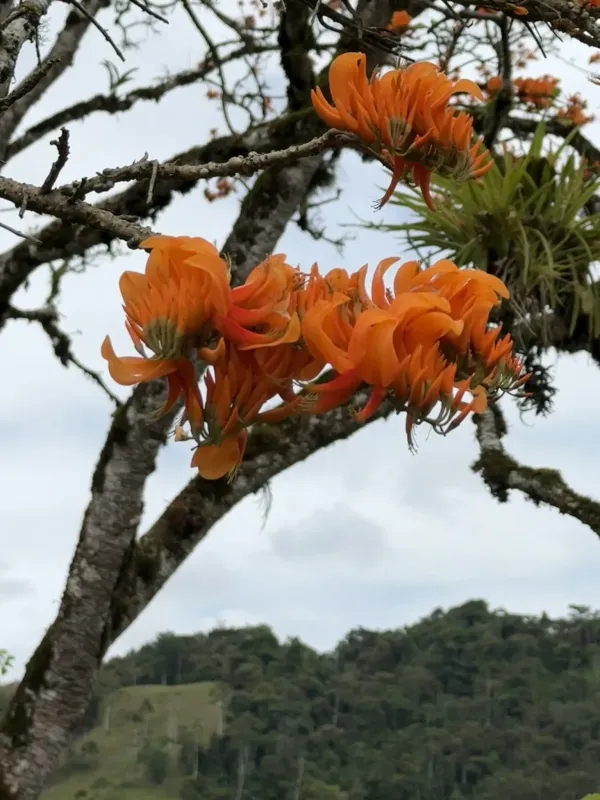
Description
Growing requirements
Erythrina poeppigiana, commonly known as mountain immortelle, is a fast-growing leguminous tree native to the tropical regions of South America. It thrives in high-altitude environments within the tropics, being a key species in mountain agriculture.
The tree requires a humid climate to reach its full growth potential and is often found in areas with high annual rainfall. It is remarkably versatile regarding soil types, demonstrating an ability to colonize and improve nutrient-poor or degraded terrains.
Biological nitrogen fixation is a defining characteristic of this species. Through a symbiotic relationship with bacteria in its root nodules, the tree converts atmospheric nitrogen into a plant-available form, significantly enhancing soil health in agroforestry systems.
Optimal development depends on consistent access to direct sunlight. While young plants are sensitive to competition, mature trees are hardy and can withstand moderate environmental stressors, provided they have adequate moisture for leaf regeneration.
The species is traditionally used in coffee and cacao plantations to provide essential shade. By managing the canopy, farmers create a microclimate that prevents soil overheating and provides a continuous layer of organic litter, supporting the main crops' productivity.
Yield
The primary yield from Erythrina poeppigiana is its substantial biomass production. Farmers frequently prune the tree canopy to harvest leaves and small branches, which are then used as high-quality mulch for soil enrichment.
Pruning regimes are typically scheduled several times per year, depending on the plantation's management strategy. This systematic process ensures a steady influx of nitrogen-rich organic matter to the underlying soil, effectively reducing the need for chemical fertilizers.
In addition to its role as a green manure, the foliage is highly nutritious for livestock. Many smallholder farmers incorporate these leaves into animal feed, leveraging the plant's high protein content to supplement cattle or goat diets.
The productivity of the plantation is maximized by careful spacing and timing. Agronomists recommend planting Erythrina in rows or along borders to maximize shade efficiency while ensuring that the harvesting process remains labor-efficient.
Though not considered a timber-grade wood, the tree provides supplementary products such as firewood and charcoal, which are valuable resources in rural tropical areas, contributing to the overall economic sustainability of the plantation.
Main diseases and pests
The tree is susceptible to several pests, most notably the Erythrina gall wasp. Infestations lead to the formation of abnormal tissue growth, which can severely stunt the development of new leaves and reduce the plant's photosynthetic capacity.
Fungal diseases like anthracnose pose a significant risk, particularly in high-humidity areas with poor air circulation. These pathogens can cause defoliation and weaken the tree, making it vulnerable to secondary infections or environmental stress.
Wood-boring beetles may also compromise the structural integrity of the trunks. Periodic monitoring of tree health is essential, and any signs of beetle activity should be managed through the immediate removal and destruction of affected parts.
Improper pruning techniques often lead to the entry of opportunistic pathogens. It is critical to ensure that cuts are clean and performed during dry weather, which prevents the build-up of moisture and potential fungal rot on exposed wood.
Maintaining the overall ecological health of the plantation through proper spacing and diversified planting helps keep pest populations under control. Reducing chemical reliance is key to preserving the beneficial insects that help manage natural balance.