
Eryngium heterophyllum
Eryngium heterophyllum
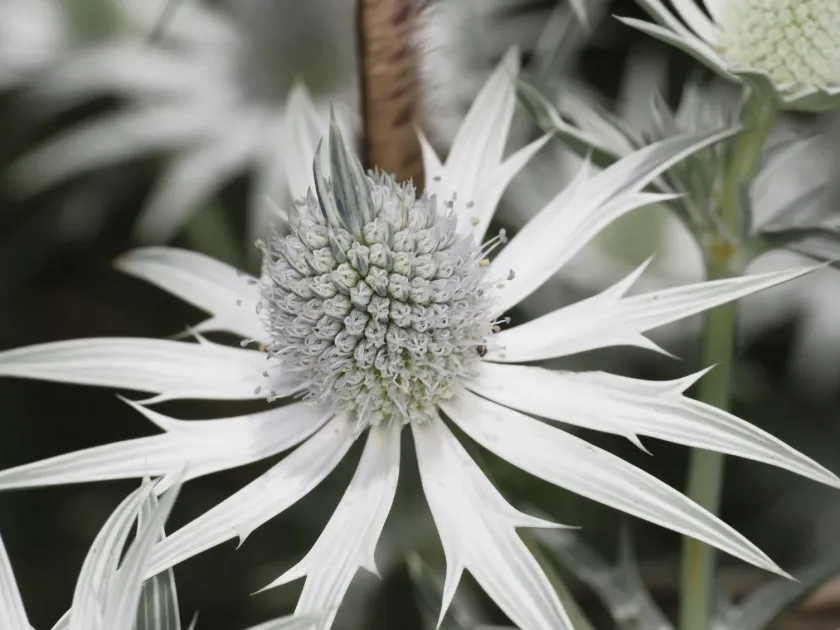
Description
Sowing dates
Eryngium heterophyllum, a member of the Apiaceae family, is a perennial herbaceous plant typically propagated from seeds. Sowing is best performed in late autumn or early spring immediately after the snow melts, as the seeds often require a period of stratification for effective germination.
When using the seedling method, seeds should be sown in late February or early March in containers filled with a light, well-draining substrate. It is crucial to provide moderate temperatures to prevent the seedlings from becoming leggy before they are transplanted to their permanent outdoor location.
Seeds should be sown at a depth of no more than 0.5 to 1 centimeter. For optimal growth, maintain a spacing of 30 to 40 centimeters between individual plants, which ensures sufficient air circulation and allows for the development of a robust basal leaf rosette.
The soil for sowing must be loose and well-drained. This culture is highly sensitive to waterlogging around the root crown, so if the soil is heavy or clay-based, it is recommended to amend planting holes with sand or fine gravel to improve drainage.
Germination generally occurs within 3 to 4 weeks. Once the plants have developed two pairs of true leaves, they can be pricked out into individual pots or moved to a nursery bed for further growth if the local climate permits.
Growing requirements
Eryngium heterophyllum is a typical xerophyte, exceptionally well-adapted to arid conditions and high temperatures. Native to the dry zones of Mexico and the southwestern United States, the plant thrives in bright, direct sunlight.
The crop prefers poor, sandy, or loamy soils with a neutral to slightly alkaline pH. Excessively rich or fertile soils can be counterproductive, leading to a loss of the characteristic blue-gray coloration of the leaves and causing the stems to become too elongated and weak.
This species exhibits high frost resistance and can overwinter in temperate climates provided that the winter soil drainage is excellent. Stagnant meltwater during the early spring is the primary cause of root system failure for this species.
During the growing season, Eryngium does not require frequent irrigation. Watering is necessary only during the first year of establishment and during periods of extreme, prolonged drought when the plants begin to show signs of wilting.
Low atmospheric humidity is an essential environmental requirement. The culture performs poorly in regions with persistent rain or high humidity, as these conditions significantly increase the risk of fungal infections and root rot.
Yield
The economic value of Eryngium heterophyllum lies not in food production, but in the yield of high-quality plant material for ornamental and floricultural purposes. Yield is measured by the number of harvestable inflorescences and total vegetative mass per unit area.
Under optimal agronomic conditions, a single plant can produce between 5 and 15 flowering stems during one vegetative cycle. In commercial settings, adhering to precise planting density allows for high output of dried floral material.
The quality of the yield depends directly on the intensity of solar exposure. Higher light levels result in more vibrant and intense coloration of the bracts, which significantly increases the market value of the product for professional florists.
Harvesting should occur when the bracts have fully matured and acquired their characteristic steel-blue or vibrant blue hue. After cutting, stems should be air-dried in a dark, well-ventilated room to maintain their structural integrity and color.
Plantation productivity remains high for a period of 3 to 5 years. After this duration, it is recommended to rejuvenate the stand by dividing the rootstock or by renewing the planting material to prevent a decline in overall stand quality.
Main diseases and pests
The primary threats to Eryngium heterophyllum are root rots caused by saturated soil conditions. Excessive moisture leads to infection by fungi such as Fusarium and Phytophthora, which can rapidly lead to the collapse and death of the entire plant.
During periods of high humidity, powdery mildew may develop on the leaf surfaces. To manage this, it is recommended to ensure proper spacing between plants to improve airflow and to apply preventative fungicides if weather conditions remain consistently damp.
Common pests include aphids and spider mites. These insects typically infest the tips of the shoots and young leaves, sucking plant sap, which causes deformation of the inflorescences and diminishes the plant's aesthetic value.
Nematodes may attack the root system if the plants are grown in poorly managed plots. Symptoms of infestation include stunted growth, yellowing foliage, and a lack of flowering despite otherwise favorable external conditions.
To prevent the spread of diseases and pests, strict adherence to crop rotation and the avoidance of overcrowding are essential. Effective management also involves the immediate removal and destruction of any damaged plant parts upon detection of initial symptoms.