
Eriotheca globosa
Eriotheca globosa
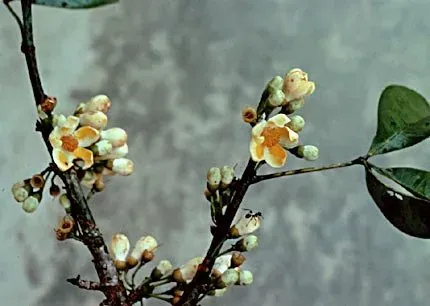
Description
Sowing dates
Eriotheca globosa is primarily propagated through seeds, which should be planted at the onset of the rainy season to benefit from high humidity. Providing a warm environment for the seeds is essential to ensure a high germination rate and strong early growth.
Before sowing, it is common practice to soak the seeds in lukewarm water to soften the seed coat, which significantly accelerates the emergence of seedlings. The soil medium should be loose and rich in organic matter to encourage root development.
Seeds are typically sown at a depth of 2–3 cm. Keeping the seedbed consistently moist, but not waterlogged, is crucial for the delicate process of early development. Light cover is provided until the first true leaves appear.
Seedlings require protection from direct, intense sunlight during their first few weeks. As they transition into robust saplings, they can be gradually moved to locations with full light exposure, ensuring they adapt well to environmental conditions.
Vegetative propagation via cuttings is possible but rarely employed due to the high skill level required to successfully root the woody stems. Hormone-based rooting agents are usually required to improve success rates in vegetative methods.
Growing requirements
Eriotheca globosa belongs to the Malvaceae family and thrives in tropical rainforest climates. It is native to South American regions where the environment is characterized by stable temperatures and heavy seasonal rainfall.
The plant demands well-draining soil to prevent root rot, which is a major threat to its survival. Sandy loam soils that allow for excellent aeration are ideal for maintaining the health of its expansive root system.
Sunlight requirements are quite high, as the tree requires full solar exposure to achieve maximum photosynthetic efficiency and fruit production. In shaded environments, the tree exhibits thin growth and reduced vigor.
Humidity levels should remain between 70% and 85%. While the species can withstand brief dry spells, consistent moisture levels throughout the growing season are preferred for commercial cultivation and high yield.
Temperature range should be maintained between 24 and 30 degrees Celsius. The species does not handle frost or cold temperatures well, which makes it strictly a tropical crop suitable for specific climate zones only.
Yield
The yield of Eriotheca globosa is primarily measured by the production of fiber-rich fruit capsules. These capsules contain a soft, silky material that has traditionally been used for various industrial and artisanal purposes.
The timber obtained from this species is highly regarded for its lightness. While not used for heavy construction, it is valued in the craft industry and for creating lightweight items like boxes or decorative components.
Productivity per hectare is largely dependent on the planting density and the maturity of the trees. Once established, the trees can be highly productive for several years, provided they receive proper nutrient supplementation.
Oil extracted from the seeds is another potential source of value. Research indicates that these oils can be processed for cosmetic or technical use, adding an extra revenue stream for the agricultural producers.
Effective orchard management, including consistent pruning and fertilization, ensures that trees remain in a productive state for longer, ultimately maximizing the return on investment for farmers.
Main diseases and pests
Pests such as mites and aphids are known to feed on the tender young leaves, especially during the transition between the wet and dry seasons. Early detection is key to controlling these populations before they impact the tree’s vitality.
Fungal pathogens represent the most significant threat, particularly those that target the root system in poorly drained soils. Root rot can cause rapid decline and eventual death of the tree if left untreated.
Leaf-eating insects can cause significant damage to the canopy, leading to reduced photosynthetic activity. Integrated pest management strategies, focusing on biological controls, are highly recommended for sustainable farming.
Sanitation is a vital aspect of disease management. Removing and destroying fallen or infected fruit prevents the buildup of fungal spores that could otherwise lead to an outbreak within the plantation.
Ensuring adequate space between trees is critical to allow for proper airflow, which significantly reduces the humidity trapped in the canopy and lowers the probability of fungal infection transmission.
Harvesting
Harvesting Eriotheca globosa is a labor-intensive process that occurs when the fruit capsules begin to naturally dehisce or crack open. Collectors must carefully time their visits to the orchard to gather the fiber before it falls to the ground.
Because fruit ripening does not occur simultaneously across the entire tree, multiple harvest rounds are necessary. This requires a dedicated workforce to monitor the canopy continuously throughout the ripening window.
Post-harvest handling is critical to quality. The harvested fiber must be cleaned of debris and dried in a well-ventilated, shaded area to prevent the development of mold, which can rapidly degrade the quality of the fiber.
Once dried, the fiber should be stored in breathable packaging to maintain its structural integrity. Avoid storing the material in tightly sealed plastic containers, as this traps moisture and creates ideal conditions for spoilage.
Transportation of the harvest should be carried out using light, breathable containers to minimize mechanical damage to the fibers during transit to the processing facility, ensuring the highest grade is maintained.