
Eriotheca candolleana
Eriotheca candolleana
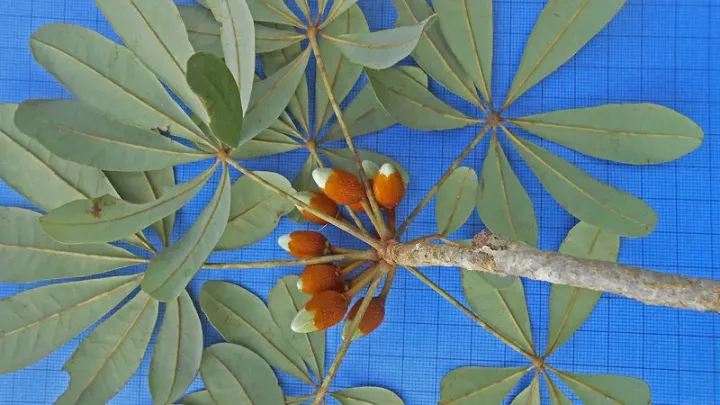
Description
Growing requirements
Eriotheca candolleana is a woody crop belonging to the Malvaceae family, subfamily Bombacoideae. In its natural habitat, this plant grows in the tropical forests of Brazil, preferring well-lit areas.
This culture develops best in humid tropical climate conditions. It is critically demanding regarding temperature regimes and cannot tolerate even short-term frosts, which limits its cultivation range.
Soil preferences include well-drained substrates with a high content of organic matter. The plant does not tolerate water stagnation in the root zone, therefore, on sites with heavy clay soils, the installation of drainage systems is mandatory.
For optimal growth, the tree requires dappled sunlight in its youth and full sun as it matures. Regular air humidity is the key to forming healthy leaf blades and intensive wood increment.
The cultivation technique includes monitoring soil pH levels, which should be in the slightly acidic or neutral range. In commercial cultivation, it is recommended to apply balanced mineral fertilizers during the active growing season.
Main diseases and pests
The main threats to the culture are specific tropical pests, such as wood-boring insects (xylophages) that damage the trunk and branches of the tree. Timely monitoring of bark condition allows for the prevention of deep damage.
Fungal diseases occurring in conditions of excessive humidity and poor crown ventilation can lead to wood rot. Prevention includes maintaining proper spacing between trees during planting.
Viral and bacterial pathogens are encountered less frequently but can cause damage to young seedlings in nurseries. An important protection step is the use of high-quality planting material free from diseases.
In the natural environment, damage can also be caused by phytophages feeding on young shoots. Controlling the population of these organisms is carried out using integrated pest management systems.
An agronomist must regularly inspect plantations to detect the first signs of infestation. The use of biological control methods is a priority for maintaining the ecological purity of the final products.
Harvesting
The economic use of Eriotheca candolleana is primarily focused on obtaining valuable wood, which is characterized by its lightness and softness. This makes it a sought-after material in carpentry and the production of lightweight structures.
Fibers obtained from the fruits and bark of some related species in this family sometimes find application as fillers, although the main emphasis in cultivation remains on forestry-technical use.
Timber harvesting requires adherence to correct felling cycles, which depend on the growth intensity at a specific plantation. In favorable conditions, the tree reaches commercial dimensions in a timeframe typical for tropical deciduous species.
Plantation maintenance involves periodic sanitary pruning to improve trunk quality. Proper crown formation minimizes the number of knots in the wood, thereby increasing its market value.
The ecological significance of the species is also substantial: these trees are often used for forest restoration and as an element of agroforestry systems for soil erosion protection.