
Eriocaulon cinereum
Eriocaulon cinereum
Description
Growing requirements
Eriocaulon cinereum is a highly sought-after aquatic plant belonging to the Eriocaulaceae family. Native to tropical regions of Asia, it is commonly found growing in wet, swampy environments and seasonal paddy fields where it thrives in moist, nutrient-rich substrates.
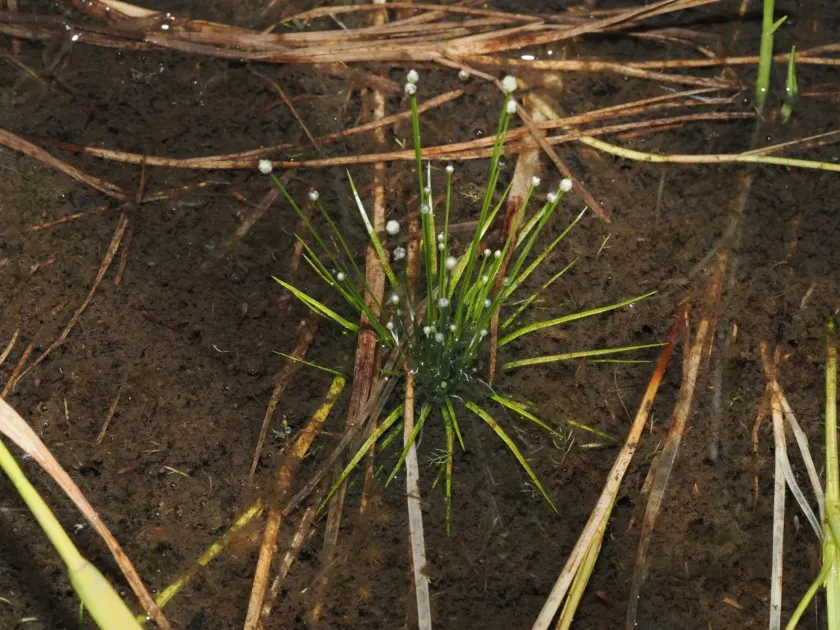
Botanically, it features a dense, radial rosette of thin, needle-like leaves that grow from a small central crown. The plant has a modest root structure that necessitates a high-quality, fine-grained substrate enriched with essential micronutrients for proper anchoring.
The cultivation of this species requires strict water parameter management. It performs best in very soft, slightly acidic water, with a General Hardness (GH) of 4-6 dGH and a Carbonate Hardness (KH) as low as possible, ideally near zero to 2 dKH.
Successful growth is contingent upon consistent CO2 injection and high-intensity lighting. Without an adequate supply of carbon dioxide, the plant will struggle to maintain its metabolic processes, resulting in stunted development and loss of vitality.
Temperature control is essential for preventing stress. A stable range of 22–26°C (72–79°F) is recommended to ensure year-round health. Deviations from this range can lead to physiological imbalances, which are often irreversible in mature specimens.
Main diseases and pests
The primary threat to Eriocaulon cinereum is environmental instability. Frequent fluctuations in pH or sudden shifts in water chemistry can trigger a total collapse of the leaf structure, causing the plant to melt or disintegrate rapidly.
Algae infestation presents a significant risk, particularly with hair or brush algae settling on the needle-like leaves. Once colonized by algae, the plant's photosynthetic efficiency drops sharply, and recovery is nearly impossible due to the intricate leaf texture.
Nutrient toxicity, specifically from excessive fertilization or unbalanced trace elements, can lead to necrotic patches on the foliage. Careful monitoring of the water column and soil-based nutrients is required to maintain a healthy growth cycle.
Anaerobic conditions in the substrate, caused by poor circulation or compacted soil, represent a critical danger to the root system. If the roots rot due to lack of oxygen, the plant is unable to uptake water, leading to rapid decay of the entire rosette.
Competition for light is a constant challenge in an aquascaped environment. If faster-growing stems or floating plants overshadow the Eriocaulon, the plant will quickly weaken and eventually die off due to the lack of necessary light intensity for photosynthesis.