
Eriocaulon cauliferum
Eriocaulon cauliferum
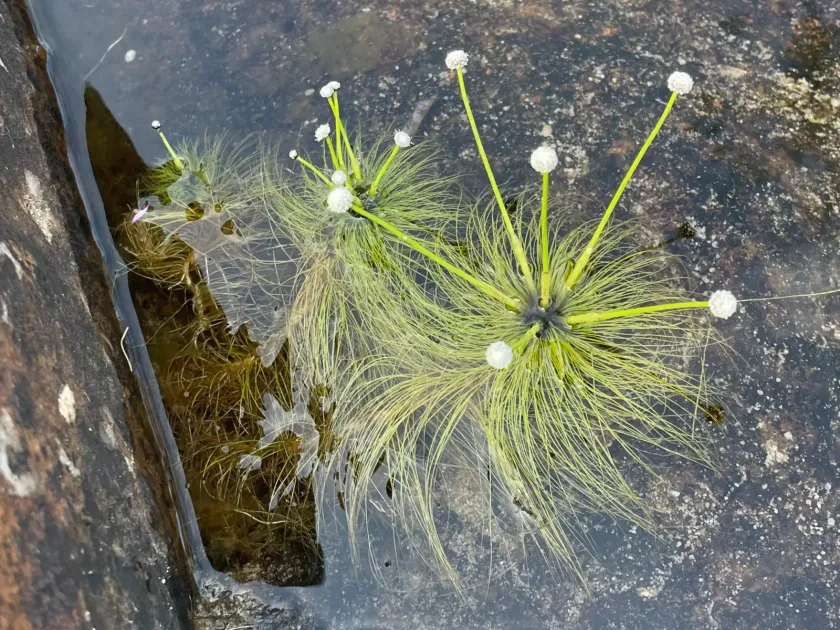
Description
Growing requirements
Eriocaulon cauliferum is a highly specialized aquatic plant belonging to the Eriocaulaceae family, naturally inhabiting the tropical regions of Southeast Asia. It is prized among aquascapers for its unique rosette form and its ability to create a focal point in high-tech planted aquariums.
The plant demands high light intensity to thrive; therefore, a high-quality LED lighting system with a full spectrum is essential. Insufficient lighting is the primary reason for the failure of this species, as it directly impacts the plant's metabolic processes and ability to maintain its rosette shape.
Water quality is of paramount importance for this species, as it requires very soft water with a low carbon hardness (KH) and a slightly acidic pH between 6.0 and 6.8. These specific parameters must be strictly maintained through the use of reverse osmosis water and mineral additives.
A nutrient-rich substrate, preferably a high-quality professional aquasoil, is required to provide the necessary minerals for the root system. This species heavily relies on root absorption to gain nutrients, making a robust root zone critical for overall plant health.
The continuous injection of CO2 is non-negotiable for Eriocaulon cauliferum cultivation. Combined with a balanced fertilization program that provides micronutrients and iron, CO2 injection ensures that the plant achieves its full growth potential and coloration.
Main diseases and pests
Algae infestation is the most persistent threat to the survival of this slow-growing plant. Filamentous algae and biofilm can quickly coat the delicate leaves, hindering photosynthesis and eventually leading to the death of the specimen if not managed promptly.
Root rot caused by anaerobic conditions in the substrate is a common issue when the soil becomes compacted or overly saturated with organic waste. Ensuring good flow around the plant and proper substrate maintenance helps to mitigate this risk.
Imbalanced nutrient levels, particularly high levels of nitrates or phosphates, can trigger stunted growth and leaf deformation. Regular water testing is necessary to ensure that the nutrient concentration remains within the optimal range for the species.
Physical damage during transplantation or maintenance can expose the plant to opportunistic bacterial infections. It is recommended to handle the plant with extreme care and avoid frequent repositioning once it has begun to establish its root system.
While not a primary disease, a lack of adaptation to new environmental conditions often results in the melting of the leaves. This is usually a sign of stress caused by sudden changes in water chemistry or temperature, which must be corrected immediately to save the plant.