
Epiphyllum phyllanthus
Epiphyllum phyllanthus (L.) Haw.
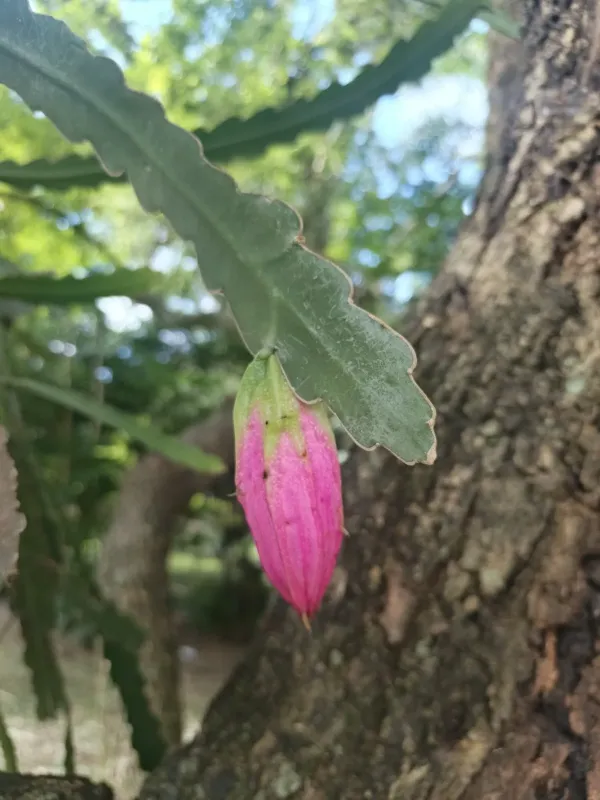
Description
Growing requirements
Epiphyllum phyllanthus is a fascinating member of the Cactaceae family, native to the tropical forests of Central and South America. Unlike desert cacti, this species has evolved as an epiphyte, growing on trees rather than in soil.
The plant features long, flattened, leaf-like stems that act as the main photosynthetic organs. These stems are succulent and store moisture, allowing the plant to survive in its native canopy environment where humidity fluctuates.
To cultivate this species successfully, it is essential to provide bright, indirect light. Direct sunlight should be avoided as it can scorch the delicate stems, leading to brown patches and loss of plant vigor.
The substrate must be highly porous and well-draining. A mix of orchid bark, peat moss, and perlite is ideal, as it mimics the organic debris found on tree branches where these cacti naturally grow in the wild.
Temperature requirements are consistent with tropical conditions, favoring a range between 18 and 25 degrees Celsius. Ensuring a period of slightly cooler temperatures in winter often helps to initiate the flowering process.
Main diseases and pests
Common pests affecting Epiphyllum phyllanthus include mealybugs, scale insects, and spider mites. These pests thrive in dry indoor conditions and can rapidly colonize the succulent stems.
Fungal infections, particularly root rot, represent the most significant threat to the plant's health. This condition is almost exclusively caused by overwatering or poor drainage within the potting medium.
Stem rot can also occur if moisture remains trapped on the surface of the plant for extended periods. Providing good air circulation is crucial to preventing the development of mold and bacterial pathogens.
In cases of heavy infestation or severe rot, immediate isolation of the plant is necessary to protect the rest of the collection. Pruning infected segments with sterilized tools is a key step in recovery.
Routine inspections of the underside of the stems and the base of the plant allow for early detection of problems. Maintaining balanced soil moisture and moderate humidity is the best defense against environmental stress.