
Enteropogon macrostachyus
Enteropogon macrostachyus
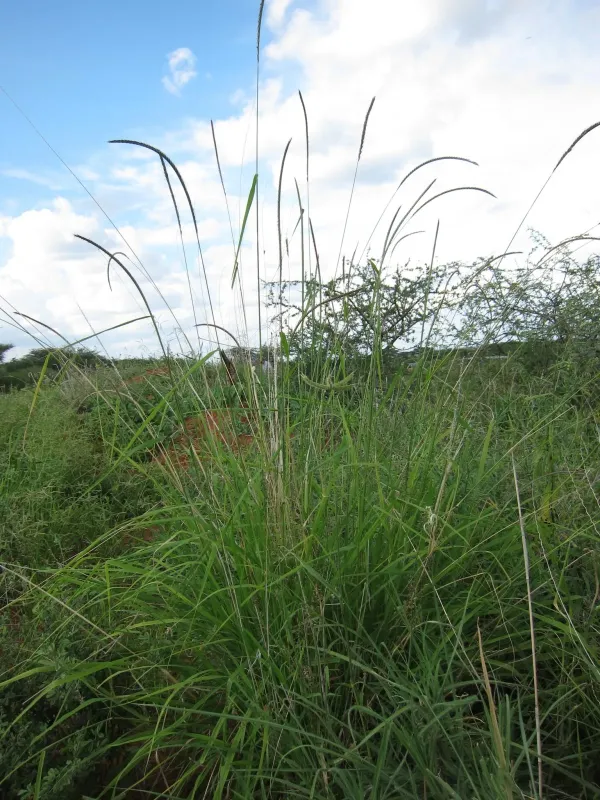
Description
Sowing dates
Enteropogon macrostachyus is a perennial grass species belonging to the Poaceae family, specifically adapted to arid and semi-arid environments. Sowing strategies generally align with the start of the rainy season or periods of consistent soil warming to ensure rapid establishment.
Successful germination requires soil temperatures consistently between 20 and 25 degrees Celsius. Given the small size of the seeds, shallow sowing is essential to maintain optimal contact with soil moisture, which is the primary driver for seed dormancy breaking.
For large-scale cultivation, precision seeding equipment is highly recommended to manage seed density effectively. Overcrowding can lead to resource competition, while thin sowing may allow weed invasion during the fragile seedling stage.
Post-sowing soil compaction, typically achieved through rolling, is a vital agronomic step. It improves capillary action, drawing moisture from deeper soil layers to the seed zone, which is critical in moisture-limited environments.
During the early vegetative phase, the grass exhibits a slow growth rate. Consequently, early-stage weed control is paramount to prevent competitive species from overwhelming the developing crop before it establishes a strong root system.
Growing requirements
This species is highly recognized for its exceptional resilience to drought and heat, making it an ideal candidate for agricultural projects in marginal, arid regions. It thrives in environments where many conventional forage crops fail.
Enteropogon macrostachyus prefers well-drained soil profiles, including sandy or stony textures, and is particularly sensitive to waterlogging. Effective soil aeration is a key factor for maximizing biomass productivity throughout the growing season.
The grass features an extensive root network designed to scavenge moisture from deep within the soil profile. This adaptation allows the crop to maintain metabolic activity even during prolonged dry spells, providing a buffer against climate volatility.
As a light-demanding species, this grass requires full sun exposure for optimal photosynthesis. Shading, whether from woody vegetation or improper spacing, will significantly stunt development and reduce the overall nutritional quality of the stand.
While tolerant of low-fertility soils, phosphorus supplementation during the initial planting phase can significantly enhance root architecture and ensure long-term stand stability in nutrient-depleted environments.
Yield
The primary utility of Enteropogon macrostachyus lies in its role as a sustainable forage crop. It provides a reliable source of nutritious fodder for livestock, valued both as pasture and as high-quality hay in challenging climatic zones.
Yield capacity is highly dependent on precipitation and site-specific soil characteristics. Under favorable management, the crop can produce multiple cuts annually, maintaining a steady supply of biomass for grazing herds.
The species is noted for its ability to recover rapidly after grazing or harvesting. This regenerative capacity is a major advantage for sustainable pasture management, allowing for strategic grazing intervals that protect the stand from degradation.
To maximize forage yield and quality, harvesting should occur before the plants reach the lignified stage. Harvesting during the peak flowering phase ensures an optimal balance of protein, energy, and structural fiber.
Current research efforts are focused on breeding varieties with higher tillering capacity to boost total biomass output, which would significantly improve the economic viability of the crop in commercial livestock operations.
Main diseases and pests
Fungal diseases, including rusts and leaf spots, represent a potential threat, particularly during periods of high humidity or poor field drainage. These pathogens can diminish photosynthetic efficiency and overall stand health.
Insect pests, such as grasshoppers and locusts, can cause significant defoliation in regions where these pests are endemic. Maintaining a vigorous, healthy crop stand is the best natural defense against minor pest infestations.
Overgrazing remains the most critical management risk. Excessive grazing pressure without adequate recovery time leads to the depletion of root reserves, which undermines plant longevity and allows for the encroachment of unwanted weeds.
Weed competition is most severe during the crop's establishment phase. Proactive site preparation and mechanical cultivation remain the preferred methods for protecting the crop until it reaches a competitive size.
Integrated Pest Management (IPM) strategies, which prioritize regular field monitoring and appropriate stocking rates, are essential for maintaining the productivity and longevity of Enteropogon pastures over several years.
Harvesting
Hay production is most successful when the crop is harvested during the heading stage. At this phenological stage, the plant maximizes nutrient storage, resulting in high-quality hay that remains palatable to livestock.
The harvesting process includes cutting and immediate windrowing to facilitate rapid drying. In hot climates, this allows for the production of sun-cured hay that retains a high level of nutritional integrity and color.
Seed harvesting requires precision, as the crop exhibits asynchronous ripening across the panicles. Direct combining should be timed to capture the peak maturity of the seeds while minimizing shattering losses during the collection process.
Post-harvest conditioning includes thorough cleaning to remove field debris and drying the seeds to a moisture content of 10-12% for safe long-term storage. Controlled-environment storage is recommended to prevent quality decline.
Adherence to harvesting protocols not only secures the crop's nutritional value but also maintains the vigor of the perennial stand, ensuring consistent output and longevity of the field for future cycles.