
Entandrophragma cylindricum
Entandrophragma cylindricum (Sprague) Sprague
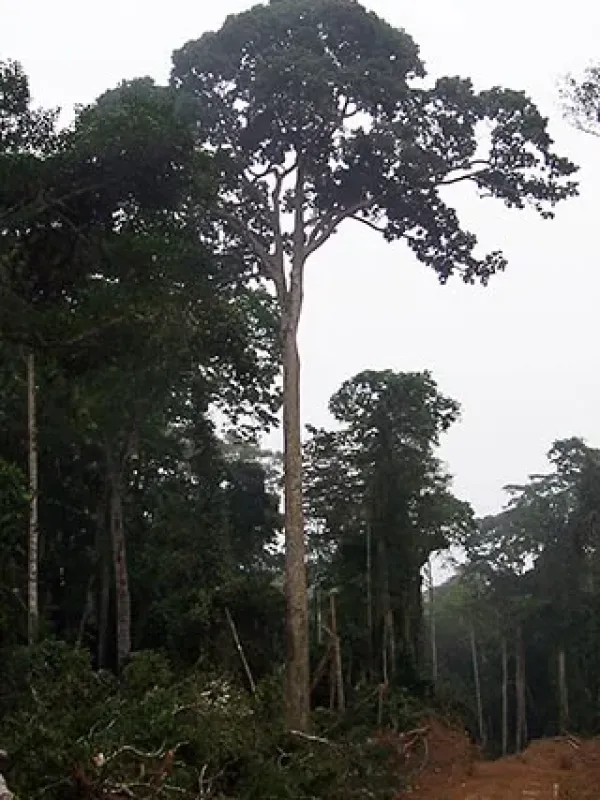
Description
Growing requirements
Entandrophragma cylindricum, commonly known in the timber trade as Sapele, is a prominent member of the Meliaceae family. It is a massive evergreen tree that can reach heights of 60 meters and develop trunks with diameters up to 2 meters in its native habitat.
The species is native to the tropical forests of West and Central Africa. It thrives in deep, fertile, and well-drained soils, typically found in lowland and montane rainforest ecosystems where humidity levels remain consistently high throughout the year.
The tree requires a tropical climate with high annual rainfall, often exceeding 1500 mm. It is sensitive to prolonged droughts, which can severely stunt the growth of young trees and affect the quality of the timber produced.
In terms of light requirements, Sapele prefers direct sunlight as it matures, although it shows some tolerance for partial shade in its seedling stage. Proper forest management is crucial to ensure young plants are not outcompeted by aggressive weeds.
Biological success of this species depends on maintaining a suitable microclimate. It is classified as an ecologically important species that requires careful environmental stewardship to prevent over-exploitation of natural forest stands.
Yield
The primary economic value of Entandrophragma cylindricum lies in its high-quality, reddish-brown timber. Sapele wood is highly prized for its durability, hardness, and a distinctive, lustrous figure, which makes it a preferred choice for fine woodworking.
Harvesting cycles for Sapele are long, typically spanning 50 to 80 years to reach timber maturity. Despite the long wait, the financial yield per hectare is significant due to the high market demand for premium hardwood species.
The wood is extensively used in the furniture industry, high-end cabinet making, and for the production of decorative veneer. It is also a favored material for crafting musical instruments, such as acoustic and electric guitar bodies.
Beyond furniture, the timber's resilience makes it suitable for marine construction, including boat building and exterior decking, where resistance to rot and fungal decay is required.
As natural supplies dwindle, the cultivation of Sapele on sustainable plantations is becoming an essential practice to meet global market needs while promoting forest conservation.
Main diseases and pests
Sapele trees are susceptible to several pests, particularly stem-boring insects. These pests can bore into the wood, significantly reducing its commercial value and sometimes introducing decay-causing pathogens.
Fungal diseases are a major threat, particularly in nursery settings or where drainage is poor. Pathogens can infect root systems and saplings, leading to stunted growth or mortality if left unmanaged.
The species faces pressure from habitat fragmentation and illegal logging. Maintaining healthy forest buffers and ensuring sustainable silvicultural practices are critical to preventing further decline in wild populations.
Environmental stress, such as shifts in precipitation patterns, can weaken the resistance of trees, making them more prone to secondary infections from native pests and local fungal threats.
- Monitoring for stem-boring insect activity.
- Implementing strict drainage protocols in nurseries.
- Sustainable thinning to improve overall stand health.