
Enkianthus campanulatus
Enkianthus campanulatus (Miq.) G. Nicholson
Description
Growing requirements
Enkianthus campanulatus, commonly known as the redvein enkianthus, is a stunning deciduous shrub belonging to the Ericaceae family. Originating from the mountain woodlands of Japan, it has become a prized specimen in temperate gardens due to its elegant growth habit and brilliant autumn foliage.
The core of successful cultivation lies in providing an acidic soil environment, ideally with a pH between 4.5 and 5.5. The soil should be well-drained, rich in organic matter, and consistently moist, mimicking the conditions of forest floors where this shrub naturally thrives.
Regarding climate, the plant prefers temperate conditions with high atmospheric humidity and protection from harsh, drying winds. While it can tolerate partial shade, it often produces the most vibrant autumn colors when grown in a location that receives moderate sunlight throughout the growing season.
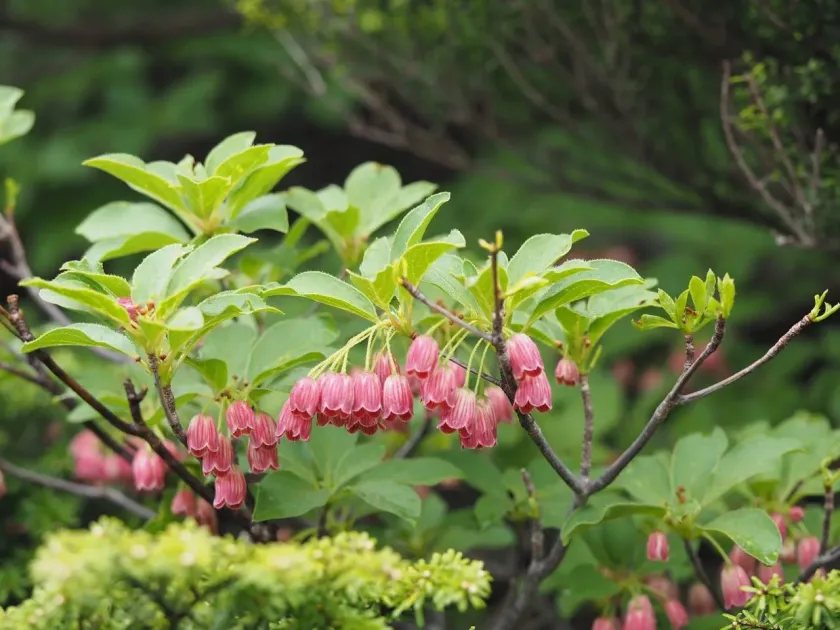
Botanically, this shrub is characterized by its whorled branches and distinctive clusters of nodding, bell-shaped flowers that appear in late spring. These blooms are typically creamy yellow to orange with delicate red veins, adding a unique texture to any garden planting scheme.
In terms of usage, Enkianthus campanulatus is a classic choice for woodland gardens, acid-soil borders, and as a focal point in landscape designs. It is highly valued for its multi-seasonal interest, offering spring flowers, deep green summer foliage, and intense red, orange, or purple autumn hues.
Main diseases and pests
The primary health issues for Enkianthus are usually physiological rather than pathological. Chlorosis is the most frequent problem encountered when the soil pH rises above the optimal range, resulting in yellowing leaves and stunted growth as the plant fails to uptake iron.
Pests are generally not a major concern, though spider mites may occasionally colonize the undersides of leaves during prolonged hot and dry spells. Maintaining soil moisture and environmental humidity is the most effective cultural method to prevent such infestations.
Fungal leaf spot diseases can occur if the planting site lacks sufficient air circulation or if the foliage remains wet for extended periods. Pruning to ensure proper canopy ventilation and avoiding overhead irrigation can significantly reduce the risk of these pathogens.
The shallow, fibrous root system is extremely sensitive to disturbance. Consequently, weeding and soil preparation should be limited to surface-level maintenance. A permanent layer of mulch, such as shredded pine bark or pine needles, is recommended to protect the roots.
If the plant shows signs of root rot or sudden wilting, it is critical to evaluate the drainage of the site immediately. Overwatering or planting in heavy, clay-based soil that holds excessive water is often fatal, as the roots require a balance of moisture and aeration to function effectively.