
Embreea rodigasiana
Embreea rodigasiana
Description
Growing requirements
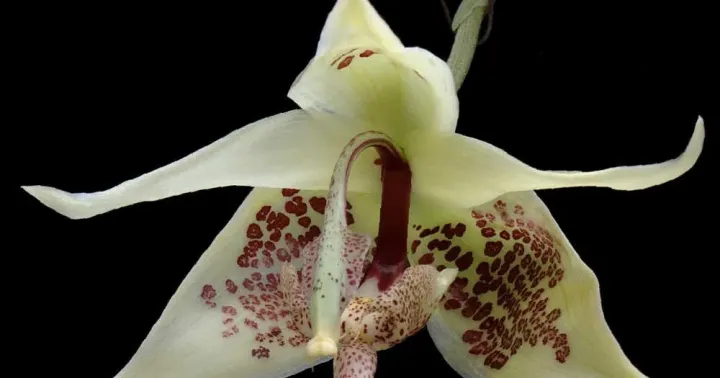
Embreea rodigasiana is a highly specialized species belonging to the Orchidaceae family. Native to the cloud forests of Colombia, this epiphytic orchid is prized by collectors for its unusual, downward-growing inflorescences, which require specialized basket culture.
The biological nature of the plant dictates its unique cultivation requirements, specifically the need for porous hanging baskets. The flower spikes naturally emerge through the base of the pot, making standard upright cultivation impossible.
In terms of climate, the plant thrives in conditions mimicking high-altitude tropical forests, requiring consistently high humidity levels ranging from 70% to 80%. It is sensitive to rapid temperature fluctuations and prefers moderate, stable thermal conditions throughout the year.
The substrate must be highly breathable to support the delicate root system, which is susceptible to suffocation. A mix of fine orchid bark, charcoal, and sphagnum moss is recommended to maintain the balance between moisture retention and essential aeration.
Light management is crucial, as Embreea rodigasiana requires bright, filtered light to maintain healthy pseudobulb development. Exposure to intense, direct sunlight should be strictly avoided to prevent phototoxicity and leaf scorch, especially during peak growth periods.
Main diseases and pests
The most common pests affecting this species are scale insects and mealybugs. These pests are often found hiding in the tight crevices between the pseudobulbs, where manual removal or targeted treatment is necessary for effective management.
Fungal pathogens and root rot pose the most significant threat to the plant's long-term health. These issues are frequently triggered by poor air circulation or over-saturation of the substrate, emphasizing the need for a strict watering schedule and proper ventilation.