
Embreea herrenhusana
Embreea herrenhusana
Description
Growing requirements
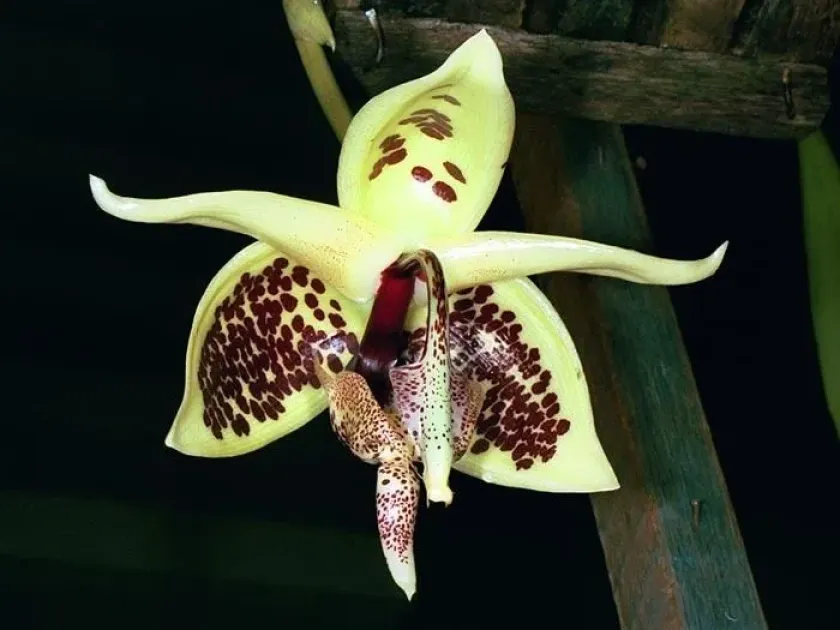
Embreea herrenhusana is a rare species of epiphytic orchid belonging to the Orchidaceae family. It is native to the cloud forests of Colombia and Ecuador, where it thrives in high-altitude tropical environments characterized by persistent moisture and moderate temperatures.
The plant features distinct pseudobulbs that function as essential water-storage organs, along with leathery, veined leaves. Its floral habit involves pendant inflorescences, necessitating the use of hanging baskets to allow the flowers to develop without restriction.
Successful cultivation of this species requires a controlled environment with relative humidity levels exceeding 70%. It is highly sensitive to heat stress and poor air circulation, which can lead to rapid physiological decline in greenhouse settings.
The potting medium must be exceptionally well-draining, typically consisting of a mix of bark, charcoal, and moss. Proper drainage is paramount, as the roots are highly susceptible to rot if kept in a waterlogged or stagnant substrate.
Watering should be performed consistently with high-quality, mineral-free water. Providing periodic cycles of light drying is essential, but the plant should never be allowed to dehydrate completely for extended periods due to its epiphytic nature.
Main diseases and pests
Bacterial and fungal rot are the most significant threats to Embreea herrenhusana. These pathogens thrive in conditions where moisture persists too long on leaves or within the root zone, often due to inadequate ventilation.
Spider mites are common pests that target this orchid, especially when ambient humidity is insufficient. These pests can cause severe damage by piercing the leaf cells, leaving characteristic mottled markings on the foliage.
Scale insects and mealybugs can also infest the plant, hiding in the crevices of pseudobulbs and leaf bases. Their presence usually indicates a compromised plant, requiring immediate physical removal or mild pest control treatment.
Viral infections are a critical concern in orchid collections, as they are easily spread via contaminated tools during maintenance. Disinfecting all cutting instruments is a mandatory practice for every orchid enthusiast.
Monitoring the plant for early signs of stress, such as yellowing of the leaves or softening of the pseudobulbs, is crucial for survival. Early intervention can often save an infected plant before the damage becomes irreversible.