
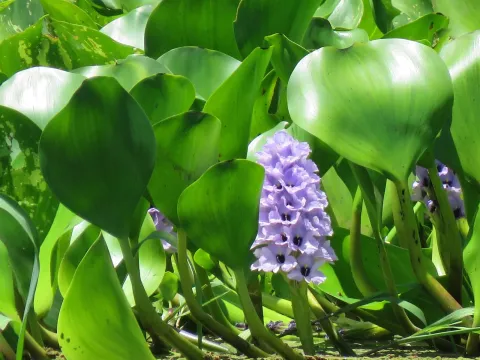
Water hyacinth
Eichhornia
Water hyacinth (Eichhornia), belonging to the Pontederiaceae family, is a free-floating aquatic plant known for its rapid growth and adaptability to tropical and subtropical climates. It is widely recognized for its potential in bioremediation.
What the section contains


Water hyacinth
The plant thrives in warm conditions with water temperatures ranging from 22°C to 30°C. Cold temperatures significantly inhibit its metabolic processes, while freezing conditions result in the immediate death of the plant tissue.
Eichhornia requires high nutrient levels, particularly nitrogen and phosphorus, to sustain its aggressive growth rates. It is highly effective in absorbing dissolved contaminants from agricultural and industrial runoff.
The ideal environment for this crop includes stagnant or slow-moving water with a pH level between 6.0 and 8.0. Adequate solar exposure is essential, as the plant depends on photosynthesis for its rapid vegetative development.
Agrotechnical management involves maintaining shallow ponds or basins that allow for consistent nutrient availability. Monitoring the water's chemical balance is crucial to ensure that the plants receive sufficient iron and other micronutrients to prevent chlorosis.
Water hyacinth is remarkably productive, with the potential to double its population density in as little as 6 to 15 days under optimal conditions. This makes it a high-yield source of biomass.
Annual dry matter yields can reach 15-20 metric tons per hectare. High nutrient load in the water significantly boosts these numbers, turning the plant into a natural bio-filter that generates surplus organic material.
Harvesting is typically done using mechanical harvesters that skim the surface of the water. Due to the extremely high water content (often exceeding 90%), post-harvest processing requires efficient dewatering and mechanical pressing.
The biomass serves as a valuable feedstock for biogas production through anaerobic digestion. Additionally, it is processed into organic compost and animal fodder, provided that the water source was free from heavy metal contamination.
The fiber content of the plant makes it a subject of research for sustainable paper production and biofuel synthesis. Its ability to regenerate quickly provides a constant supply of renewable raw material.
While water hyacinth is robust, it can suffer from fungal infections, particularly leaf blight, when plants are overcrowded or stressed. Proper spacing and circulation help mitigate these risks.
Pests are a primary concern for water hyacinth cultivation, with the most destructive being Neochetina weevils. These insects feed on leaves and stems, leading to severe damage and reduced photosynthetic capacity.
The larvae of the moth Sameodes albiguttalis are another significant threat, as they bore into the petiole tissue, weakening the plant's structural integrity and increasing susceptibility to secondary infections.
Effective pest management often involves integrated biological control strategies, such as introducing specific insect populations that target the plants, although this is more common in weed control than in biomass production.
Environmental stressors such as fluctuating pH levels or sudden spikes in salinity can lead to yellowing leaves and plant decay. Maintaining stable water quality is essential to sustain healthy crops throughout the growing season.