
Water hyacinth
Eichhornia crassipes (Mart.) Solms
Description
Sowing dates
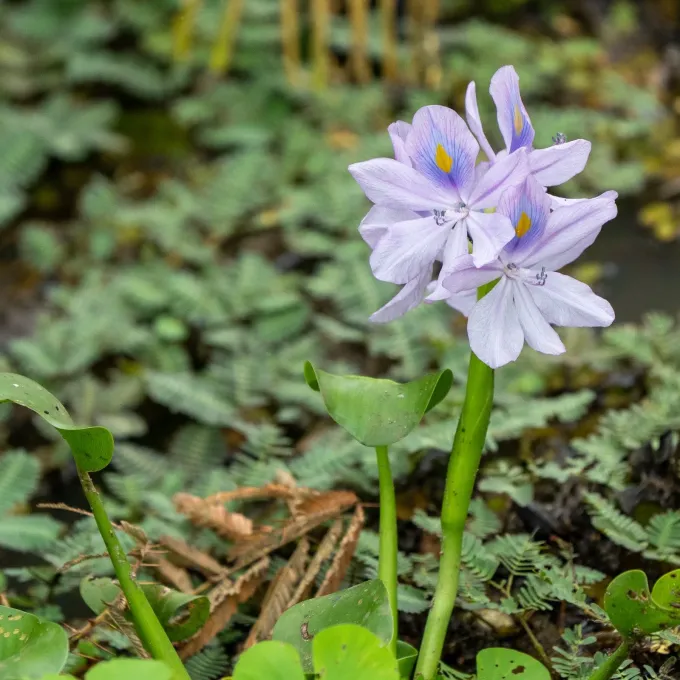
Eichhornia crassipes, commonly known as the water hyacinth, is a fast-growing aquatic perennial belonging to the Pontederiaceae family. It is a tropical species that does not tolerate freezing temperatures, requiring warm conditions for cultivation.
In temperate zones, planting occurs in late spring or early summer once water temperatures consistently exceed 20°C. In controlled environments, such as greenhouses or recirculating systems, cultivation can occur year-round.
The plant reproduces primarily via vegetative stolons. Starting with a few healthy mother plants allows for rapid colonization of the water surface. Density should be monitored to prevent overcrowding, which can lead to reduced plant vigor.
Given its aggressive growth rate, cultivators must manage its spread carefully. The species can double its biomass in less than two weeks under optimal light and nutrient conditions.
While highly productive, the plant is considered a significant invasive species in many parts of the world, necessitating strict regulations and containment strategies for any agricultural or industrial use.
Growing requirements
Water hyacinth thrives in high light intensity and warm water temperatures, typically between 22°C and 30°C. Cold stress significantly inhibits metabolic processes and root health.
The species is a hyper-accumulator of nutrients, showing a high demand for nitrogen, phosphorus, and potassium. This makes it exceptionally effective at removing organic pollutants from agricultural run-off and wastewater.
A well-aerated water surface is essential for the plant to thrive. The root system is highly adapted to filter suspended solids and dissolve heavy metals, provided the water pH remains near neutral or slightly alkaline.
In indoor settings, full-spectrum artificial lighting is required to maintain growth during low-light months. Inadequate lighting results in spindly foliage and poor development of the characteristic bulbous petioles.
Water quality monitoring is a key part of the agrotechnology involved. The presence of excessive algae can create competitive pressure, necessitating the management of light and nutrient availability.
Yield
The yield of water hyacinth is measured by its rapid biomass production, which is among the highest of any aquatic plant. It functions as a powerful biological factory for converting solar energy into organic matter.
Under tropical conditions, the plant can yield hundreds of tons of fresh biomass per hectare annually. This production level makes it a viable feedstock for composting, bioenergy production, and livestock feed supplements.
Harvested biomass is rich in cellulose and nitrogen, making it excellent for anaerobic digestion in biogas plants. Proper pre-treatment of the harvested material is required to ensure efficient fermentation.
Yield management also involves the strategic removal of plants to maintain the ecosystem's nutrient balance. Harvesting prevents the senescence and decay of older plants, which would otherwise recycle pollutants back into the water.
Commercial harvesting is typically performed on a rotational basis, ensuring that a portion of the population always remains to continue the water-cleansing process and sustain growth cycles.
Main diseases and pests
Temperature fluctuations and frost are the primary threats to water hyacinth, as the plant lacks any mechanism to survive freezing conditions in the field.
The plant is susceptible to various fungal pathogens, such as Cercospora, which can cause leaf spot disease, leading to reduced photosynthetic capacity and overall plant decline.
Specific insect pests, particularly certain species of weevils, can decimate large populations by feeding on leaves and petioles, posing a significant challenge to large-scale aquaculture operations.
Competition for space with algae and other invasive aquatic weeds can restrict the growth of water hyacinth, especially in stagnant or poorly managed water bodies.
High salinity levels in the water can inhibit growth and lead to necrosis of the root system, ultimately resulting in the loss of the crop and reduced water treatment efficiency.
Harvesting
Harvesting is typically done using mechanical systems, such as conveyor belts or specialized harvesters, designed to lift the floating mats from the water surface efficiently.
Timely removal of the biomass is critical to ensure that the water treatment capacity of the facility remains optimal and to prevent biomass from rotting in the tank or pond.
Post-harvest management is crucial; the biomass should be dewatered to reduce its volume, as fresh plants contain approximately 90–95% water, making transport costly if not processed on-site.
When used for feeding livestock, the biomass must undergo heat treatment or ensiling to eliminate potential parasites and ensure the product is safe for consumption.
Sustainable harvesting schedules are developed based on the plant's doubling time, ensuring that the population is kept in a state of active, vigorous growth rather than stagnation.