
Anchored water hyacinth
Eichhornia azurea (Sw.) Kunth
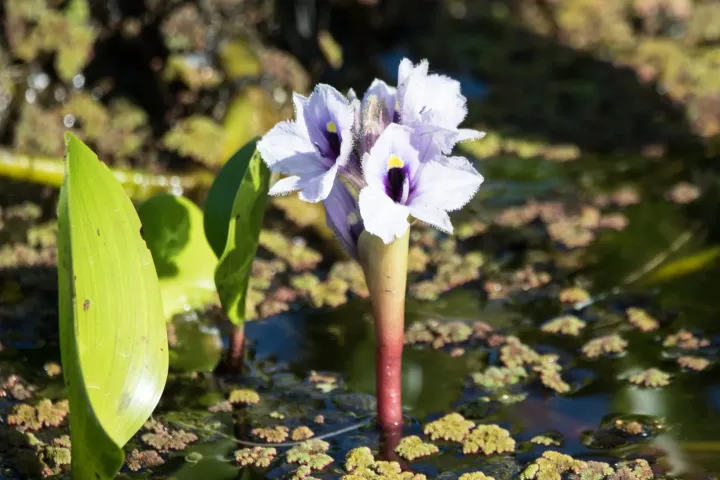
Description
Growing requirements
Anchored water hyacinth (Eichhornia azurea) is a member of the Pontederiaceae family. It is a perennial aquatic plant native to the tropical wetlands of Central and South America, where it thrives in slow-moving water bodies.
Unlike its floating relatives, this species typically roots in the substrate, making it a popular choice for aquatic gardening and large-scale aquarium landscaping where stability is required.
The plant requires high light intensity to maintain its characteristic structure and color. Without sufficient photons, the plant will become elongated and lose its competitive vigor against other species.
Tropical climate conditions are essential for survival. It grows best in temperatures ranging from 22°C to 28°C. Cold stress can lead to the rapid deterioration of the stem and potential death of the plant.
A nutrient-rich substrate is vital for healthy growth, as the plant absorbs a significant portion of its minerals through its root system. Supplementation with CO2 and micro-nutrients is standard practice in intensive cultivation.
Main diseases and pests
The most significant threat to Eichhornia azurea is the competition from filamentous algae, which can choke the plant if nutrient levels are poorly managed in the aquatic environment.
Chlorosis, or yellowing of the leaves, is a frequent physiological issue caused by iron deficiency. This condition makes the plant increasingly susceptible to fungal infections and tissue decay.
Poor water circulation leads to the accumulation of organic debris around the base, which can cause root rot. Keeping the water flow clear is necessary to ensure the health of the lower stem segments.
Snails and certain aquatic pests may feed on the tender tips of the plant, causing stunted growth and irregular development of new leaves.
Integrated management involving regular water parameters monitoring, balanced fertilization, and mechanical removal of competing algae is the key to maintaining a healthy crop of this species.