
Creeping Edraianthus
Edraianthus serpyllifolius
Description
Growing requirements
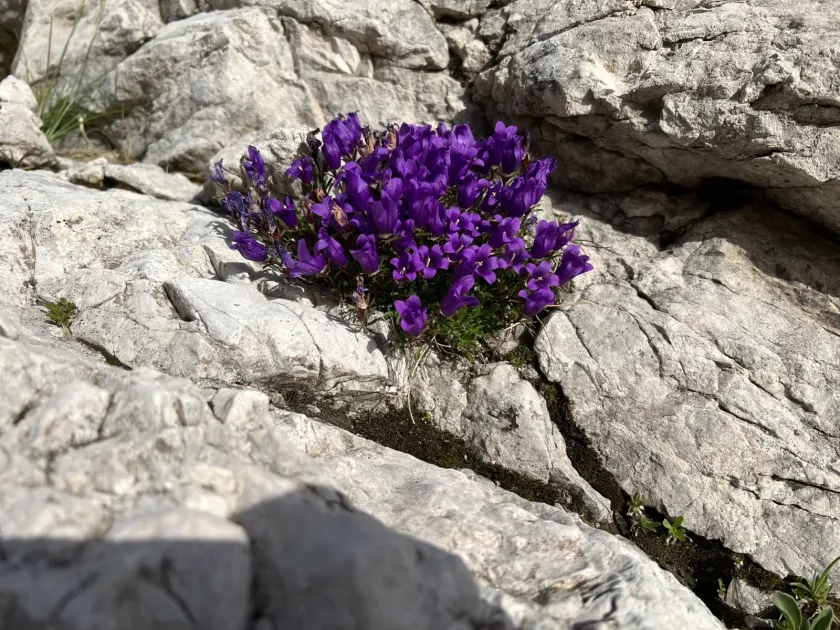
The Creeping Edraianthus (Edraianthus serpyllifolius) is a dwarf perennial plant species belonging to the Campanulaceae family. It is native to the rocky, mountainous regions of the Balkans, where it grows in limestone crevices, adapting to harsh environmental conditions.
Botanically, it is recognized for its dense, cushion-forming habit. The foliage consists of narrow, dark green leaves that are almost completely obscured by vibrant, bell-shaped violet or purple flowers during the late spring and early summer flowering period.
For successful cultivation, excellent soil drainage is paramount. The plant is highly sensitive to moisture accumulation at the root crown, which can lead to rapid decay. It is recommended to use a lean substrate containing a high percentage of gravel and sand.
Climatically, this species thrives in locations with full sun exposure and good air circulation. While it prefers cool alpine conditions, it can tolerate heat if provided with adequate light and proper soil drainage to prevent fungal issues related to soil saturation.
In terms of usage, the Creeping Edraianthus is highly valued in horticulture as a prized specimen for rock gardens, scree slopes, and alpine troughs. Its slow growth and compact nature make it an ideal choice for specialized high-altitude landscape designs.
Main diseases and pests
The primary threat to the health of Edraianthus serpyllifolius is root and crown rot, typically caused by waterlogged soil. Proper drainage is the most effective preventative measure against these fungal pathogens throughout the growing season.
Slugs and snails are the most common pests that can destroy the delicate foliage, particularly in damp or humid weather. Gardeners should employ manual collection or bait traps to protect the plants from these mollusks.
Soil-borne insects and larvae can occasionally cause damage to the root system, weakening the cushion and leading to plant loss. Regular monitoring of the plant's health during the spring growth phase is essential for early detection of issues.
Overcrowding with larger, faster-growing species can also inhibit the growth of the Creeping Edraianthus, leading to stunted development and increased risk of diseases due to reduced airflow within the cushion.
Winter desiccation is another risk in colder climates, especially if the plant is exposed to freezing winds without snow cover. Applying a light protective mulch or protective cover can help maintain moderate soil temperature during the dormant phase.