
Edraianthus pumilio
Edraianthus pumilio
Description
Growing requirements
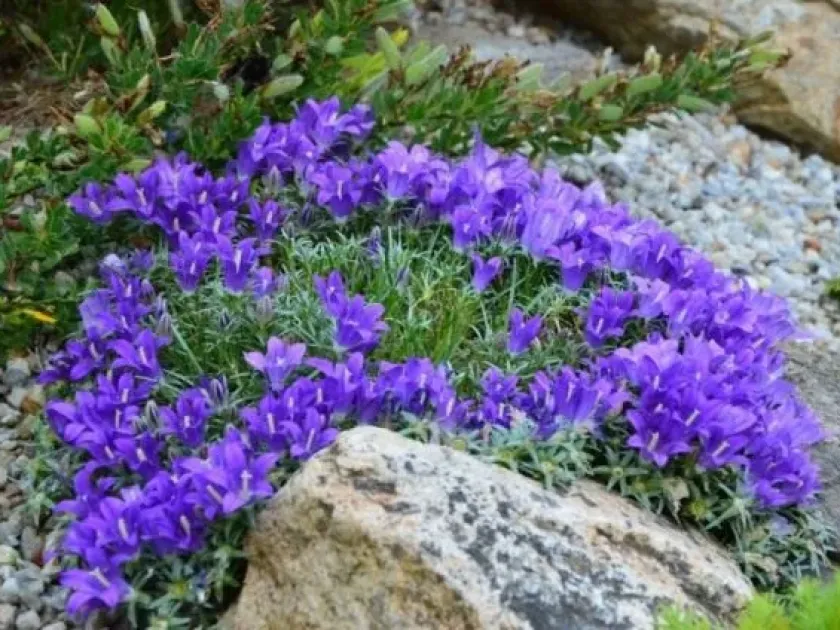
Edraianthus pumilio, commonly known as the dwarf grass-lily or rock bell, is a herbaceous perennial belonging to the Campanulaceae family. It is native to the rocky and mountainous regions of the Balkan Peninsula, specifically flourishing in limestone scree habitats.
This alpine species requires full sun exposure to maintain its compact, cushion-like growth habit. Any form of shade will cause the plant to become "leggy" and will significantly reduce the intensity and duration of its blooming period during the early summer.
Soil requirements are strict: the medium must be highly inorganic, gritty, and exceptionally well-draining. Cultivators should use a mix of sand, grit, and limestone chips to mimic the plant's natural environment and prevent moisture from stagnating around the crown.
Agricultural management for this species is focused on preservation rather than production. Because it is adapted to nutrient-poor alpine soils, fertilization should be avoided, as an abundance of nitrogen will lead to weak growth and poor flowering.
The primary use of Edraianthus pumilio is in ornamental horticulture, particularly in trough gardens, rock walls, and alpine rockeries. Its ability to create a dense mat of violet-blue flowers makes it highly prized among collectors of alpine flora.
Main diseases and pests
The most significant threat to Edraianthus pumilio is root rot caused by poor soil drainage and high humidity. Because the plant is native to dry mountainous regions, persistent dampness is the leading cause of plant mortality in cultivation.
Pest pressure is generally low, though slugs and snails can occasionally graze on the succulent-like foliage during damp spring weather. Maintaining a clean, gravel-mulched surface around the plant can help deter these pests from reaching the crown.