
Edraianthus montenegrinus
Edraianthus montenegrinus
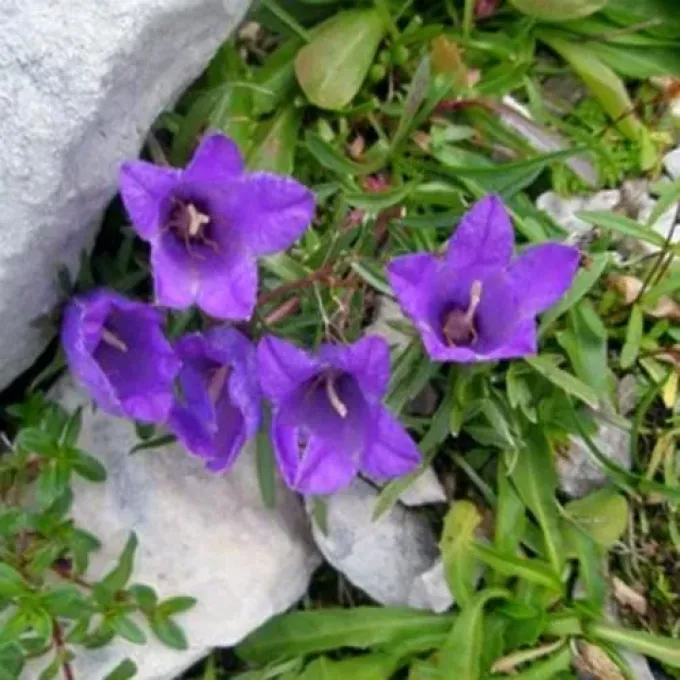
Description
Sowing dates
Seeds of Edraianthus montenegrinus should be sown in early spring or autumn, often benefiting from cold stratification to improve germination rates in temperate climates.
It is essential to use a gritty, well-draining seed-starting mix, as the seedlings are highly susceptible to dampness and fungal issues during their initial growth phase.
Once sown, the containers should be kept in a cool, bright location, protected from direct harsh afternoon sun to prevent the soil from drying out too rapidly.
Pricking out seedlings must be performed with extreme care to maintain the integrity of the taproot, which is crucial for the plant's long-term survival.
Spacing the young plants about 15–20 cm apart in the garden will ensure adequate airflow and prevent overcrowding as they mature into dense cushions.
Growing requirements
Edraianthus montenegrinus is a member of the Campanulaceae family, renowned for its low-growing, cushion-forming habit and vibrant blue-violet bell-shaped flowers.
The plant thrives in full sun and requires exceptionally good drainage, making it an ideal choice for rock gardens, scree beds, or crevices in stone walls.
Soil should be lean and gritty; any heavy or overly organic soil will cause the roots to rot, as this plant is evolved for mountainous, rocky conditions.
Watering requirements are relatively low; once established, the plant is drought-tolerant and should only be watered during extreme heatwaves or dry spells.
This alpine species is winter-hardy and performs best when allowed to experience the seasonal temperature fluctuations typical of its natural mountainous habitat.
Main diseases and pests
The primary threats to this species include root and crown rot, which are almost always caused by poor soil drainage and stagnant moisture around the base.
Slugs and snails are the most common pests, as they are attracted to the succulent-like foliage and flowers, causing significant cosmetic damage in wet seasons.
Insufficient ventilation around the plant's cushion can lead to botrytis or other fungal infections, especially in humid or overcast weather conditions.
Management of these threats involves meticulous site preparation, such as top-dressing the plant base with fine gravel to keep the foliage dry.
Chemical control should be used as a last resort, prioritizing organic methods like manual collection of slugs to protect the delicate alpine environment.