
Edraianthus graminifolius
Edraianthus graminifolius
Description
Sowing dates
The sowing of Edraianthus graminifolius seeds typically takes place in late winter or early spring. These seeds require a period of stratification to break dormancy, making them ideal for cold-frame or greenhouse propagation.
The optimal germination temperature ranges between 15 and 18 degrees Celsius. Use a highly porous, well-draining seed-starting mix to ensure the seeds do not suffer from damping-off disease.
Seeds should be sown thinly on the surface and pressed gently into the substrate. They require light to germinate, so covering them with soil is generally discouraged; a light dusting of grit may be used instead.
Pricking out the seedlings should be handled with extreme care due to the plant's taproot system. Young plants are sensitive to root disturbance, so using individual pots or cells is highly recommended.
Seedlings develop quite slowly during their first season. Consistent but light moisture is essential, ensuring that the containers are placed in a bright, airy location to promote sturdy growth.
Growing requirements
Edraianthus graminifolius is a charming member of the Campanulaceae family. It originates from the rocky mountain regions of the Balkans and Southern Europe, where it thrives in harsh conditions.
The plant requires full sun and exceptionally free-draining soil. In garden settings, it is best suited for rock gardens, scree beds, or stone walls where water cannot pool around the root crown.
This species is highly hardy but dislikes the combination of winter wetness and cold. A grit mulch applied around the base of the plant helps to keep the foliage dry and prevents crown rot.
Soil should be poor and slightly alkaline, mimicking the limestone crevices of its natural habitat. Over-fertilization will lead to weak, elongated stems and a reduction in the plant's natural compact shape.
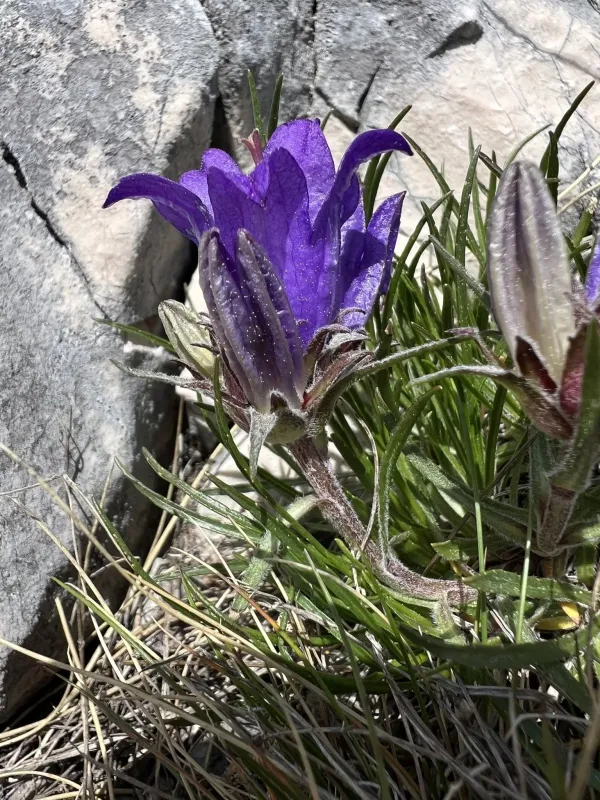
The primary use of this species is ornamental. It forms dense, tufted mounds that produce masses of bell-shaped, violet-blue flowers in late spring and early summer, creating a stunning visual impact.
Main diseases and pests
Fungal infections are the most significant threat to the health of Edraianthus. These issues almost always stem from poor drainage or excessive humidity, which leads to crown and root rot.
Slugs and snails are the most common pests, particularly when new growth emerges in the spring. Protective measures such as grit barriers or organic bait are often necessary to keep the foliage intact.
Aphids may infest the flower buds during the peak blooming season. If detected, a gentle wash with insecticidal soap or a systemic pesticide can protect the flowers and ensure a full display.
Root-dwelling insects like vine weevil larvae can occasionally cause damage to the taproot. Monitoring for wilting plants is important to identify these pests before they destroy the root system.
Maintaining a clean environment around the plant is vital. Removing withered leaves and debris prevents the buildup of moisture and pathogens, keeping the plant healthy throughout the year.