
Echinospartum boissieri
Echinospartum boissieri
Description
Growing requirements
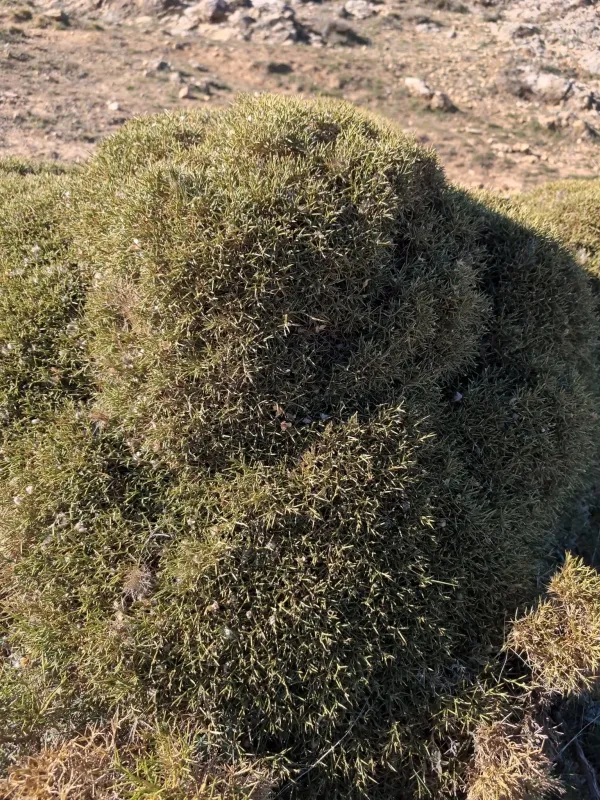
Echinospartum boissieri is a distinctive shrub belonging to the Fabaceae family, native to the high-altitude regions of Spain. It is highly adapted to rocky slopes and mountain environments, characterized by its dense, cushion-like growth habit and extreme resilience.
The botanical structure of this plant features stiff, spiny branches designed to withstand harsh winds and prevent water loss. Its small leaves and woody, compact frame allow it to survive in nutrient-poor, stony substrates where few other plants can thrive.
Cultivation requirements focus on mimicking its natural mountain habitat: full sun exposure is non-negotiable for maintaining its structural integrity. The soil must be exceptionally well-draining, as any accumulation of moisture around the roots is detrimental to its health.
In terms of хозяйственное использование, this plant serves as a perfect architectural specimen for rock gardens, dry borders, or xeric landscapes. It offers a unique visual appeal throughout the year, especially when blooming with its characteristic yellow pea-like flowers.
Maintenance is minimal, as the species is well-adapted to surviving on lean soils with very low rainfall. It is an excellent choice for sustainable gardening projects that prioritize drought-tolerant flora and low-input maintenance strategies.
Main diseases and pests
The most significant threat to Echinospartum boissieri is fungal infection of the root system, triggered primarily by poor drainage and waterlogged conditions.
Improper winter protection or soil freezing while saturated can cause crown rot, which is usually fatal for mature specimens of this species.
While the plant is generally pest-resistant due to its spiny nature, localized aphid infestations can occur during periods of unseasonably warm spring weather.
Competition from fast-growing weeds is a major risk, as they can overshadow the plant and retain moisture near the base, disrupting its xerophytic lifestyle.
Because of its slow growth rate, the plant is vulnerable to mechanical damage, so it should be planted away from high-traffic areas in the landscape.