
Dyssodia papposa
Dyssodia papposa
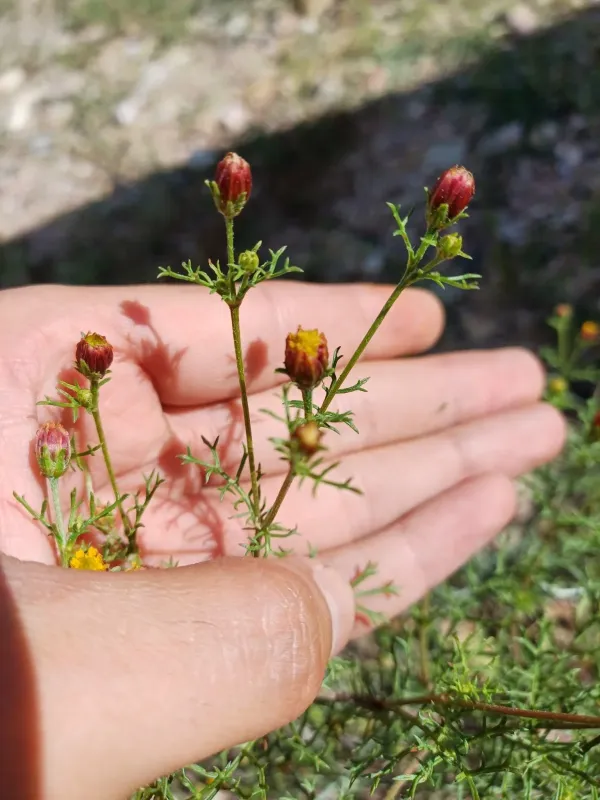
Description
Sowing dates
Dyssodia papposa is an annual herbaceous plant belonging to the Asteraceae family. In agricultural settings, this species is typically regarded as a ruderal weed, yet its biological cycles are strictly tied to the warmer seasons.
The seeds of the plant exhibit high viability and germinate primarily in the spring once the topsoil warms to 12-15 degrees Celsius. The optimal period for seedling emergence is generally late April or May, depending on the climatic zone.
The plant possesses a notable capacity for self-seeding, which renders it highly aggressive in disturbed areas or fallow fields. Mass seed germination often correlates with the first significant rainfall events occurring at the end of the spring season.
For the cultural control of Dyssodia, it is recommended to perform pre-sowing cultivation aimed at eliminating the first flush of seedlings. Repeated soil tillage during the active growth phase significantly reduces the weed density on the field.
In specific cultivation systems for essential oil crops, Dyssodia may appear as a companion species; therefore, its emergence timing must be considered when scheduling chemical protection for the primary crop.
Growing requirements
Dyssodia papposa prefers open, sunny locations with moderately moist, well-drained soil. The crop displays a high level of tolerance to both dry spells and periods of temporary waterlogging.
The plant is not demanding regarding soil fertility, growing successfully on both loamy and sandy substrates. However, the most vigorous specimens are typically observed on nitrogen-rich soils, often found on abandoned livestock sites.
Stable high temperatures during the summer are required for the plant's optimal development. In regions with short growing seasons, the plant's development may be stunted, leading to lower overall biomass production.
Soil pH is a secondary factor for Dyssodia, as it adapts well to a wide range of acidity levels. Nevertheless, on highly saline soils, the plant's growth is significantly suppressed, which limits its distribution in arid steppe zones.
The species exhibits strong competitiveness against other plants due to the exudation of specific allelopathic compounds that inhibit the growth of surrounding vegetation.
Main diseases and pests
The primary diseases affecting Dyssodia are fungal infections, including powdery mildew and various types of root rot. These diseases typically manifest under conditions of high humidity and poor soil aeration.
Among pests, aphids and spider mites pose the greatest threat, as they actively feed on the cell sap of young shoots. During the flowering stage, the plant may also be susceptible to thrips infestations.
Insect herbivores rarely cause the collapse of an entire Dyssodia population because the plant possesses robust defensive mechanisms. Its characteristic pungent odor serves as a deterrent to many common agricultural pests.
To combat fungal pathogens in high-humidity conditions, broad-spectrum fungicides are employed. In commercial fields, however, pathogen control is primarily achieved through standard agricultural management practices.
Damage to the root system by soil-dwelling larvae, such as wireworms, can lead to reduced plant vitality, although Dyssodia is known for its high regenerative capacity.