
Jelutong
Dyera polyphylla
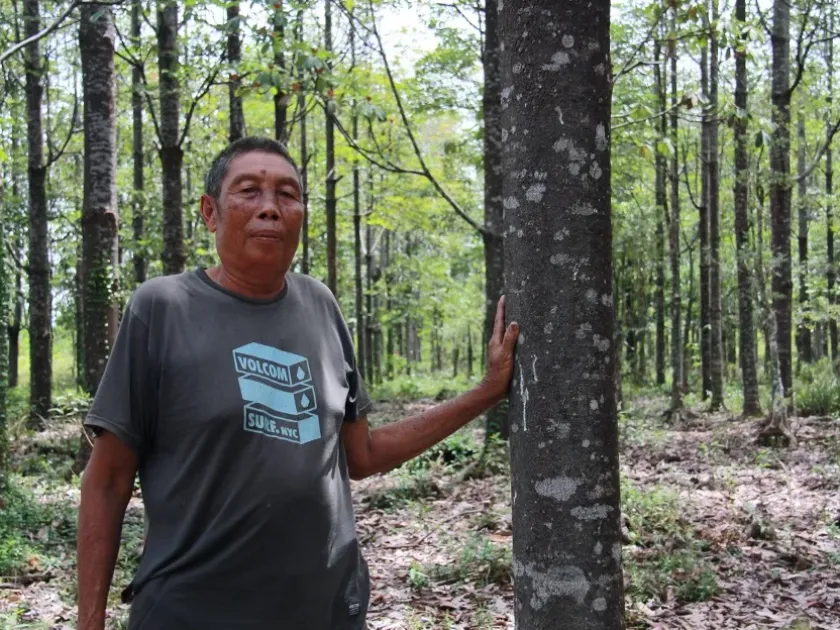
Description
Growing requirements
Dyera polyphylla, commonly known as a type of Jelutong, is a large tree belonging to the Apocynaceae family. It is native to the peat swamp forests of Borneo and Sumatra, where it thrives in environments that would be lethal to most other tree species.
The tree requires a specific tropical climate characterized by high annual rainfall and consistent temperatures. It is biologically adapted to waterlogged soils, which allows it to dominate in wetland ecosystems where other crops cannot grow effectively.
Soil requirements for this species include high acidity and a deep layer of peat, which provides the necessary nutrients for the tree's development. Its specialized root system is essential for maintaining stability in soft, saturated soil conditions.
Agricultural management of Jelutong involves carefully controlled planting densities to balance growth rates and resource availability. Young trees require careful protection from high-intensity light and direct exposure to harsh environmental fluctuations.
Economically, Dyera polyphylla is highly valued for its latex, historically used in the manufacturing of chewing gum and as a core material for submarine cables. The wood itself is also a valuable timber product due to its fine texture and easy workability.
Main diseases and pests
The main pests threatening Jelutong plantations are wood-boring beetles that penetrate the trunk, potentially introducing decay and disrupting the flow of latex. Maintaining healthy, unstressed trees is the best natural defense against these infestations.
Fungal pathogens pose a significant threat, especially when bark harvesting practices are not standardized. Once the bark is compromised, humidity facilitates the growth of rot-inducing fungi that can compromise the structural integrity of the tree.
Invasive vines and weeds are a constant challenge, as they can smother young saplings and compete for light in the canopy. Manual clearing and selective weeding are essential practices to ensure the plantation reaches maturity without significant setbacks.
Hydrological instability represents a major threat; the tree relies on high water tables to maintain its physiological balance. Any drainage projects or upstream water diversion can lead to severe dieback of mature stands.
Environmental stressors related to land-use change often lead to increased exposure to local pathogens. Implementing buffer zones and maintaining the surrounding forest structure is a key strategy for protecting the health of these commercial plantations.