
Dwarf Russian almond
Prunus tenella Batsch
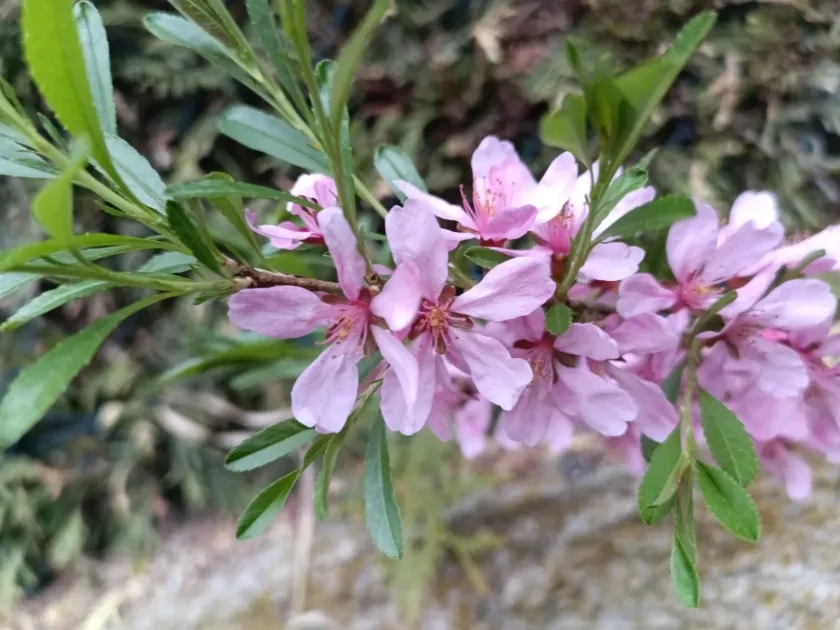
Description
Growing requirements
Prunus tenella Batsch, commonly known as the dwarf Russian almond or low almond, is a deciduous shrub belonging to the Rosaceae family. Native to the steppe regions of Eastern Europe and Western Asia, this plant has adapted to harsh environmental conditions, including severe winter frosts and prolonged summer droughts.
This shrub is highly valued for its exceptional hardiness and ability to thrive in poor, rocky, or sandy soils. It requires a sunny, open location for optimal development; limited sunlight often results in sparse flowering and stunted, leggy growth patterns that compromise its ornamental appeal.
Botanically, the dwarf Russian almond is a compact shrub rarely exceeding 1.5 meters in height. It features a robust root system and spreads via root suckers, allowing it to colonize slopes and stabilize soil in arid, wind-swept environments where other species fail to survive.
The cultural requirements are minimal, focusing on selecting a well-drained site with a neutral to alkaline pH. The plant does not tolerate heavy, clay-rich soils that remain saturated with water, as standing moisture significantly increases the risk of root rot and overall plant decline.
Routine maintenance includes occasional pruning to remove dead or diseased wood and to maintain a desirable shape. Being a naturally slow-growing plant, it does not require intensive fertilization, although a light application of compost can be beneficial in extremely nutrient-deficient soils.
Main diseases and pests
Monilia blight (blossom wilt) is the most significant pathological threat to this species, particularly during wet spring seasons. It infects the flowers and rapidly spreads to the twigs, necessitating the use of fungicides to prevent large-scale necrosis of the shrub branches.
Aphids are the most common insect pests, typically congregating on the succulent new growth during the spring flush. Their feeding activity leads to leaf curling and weakened shoots, which can be managed with insecticidal soaps or systemic treatments if the infestation becomes severe.
Shot-hole fungus, or Coryneum blight, causes characteristic spots that drop out, leaving small holes in the foliage. This disease can significantly reduce the photosynthetic capacity of the plant and should be addressed through careful pruning of infected stems and fungicide applications.
Root rot fungi pose a constant risk in sites with poor drainage, often leading to the sudden death of mature shrubs. To mitigate this risk, it is essential to ensure that the root zone is aerated and free from long-term water accumulation, especially during dormant periods.
Powdery mildew may manifest as a white, dusty coating on the leaves during periods of fluctuating humidity in late summer. While generally not fatal, it impacts the aesthetics of the foliage, making preventative hygiene and occasional treatment necessary in susceptible garden environments.