
Dumasia villosa
Dumasia villosa
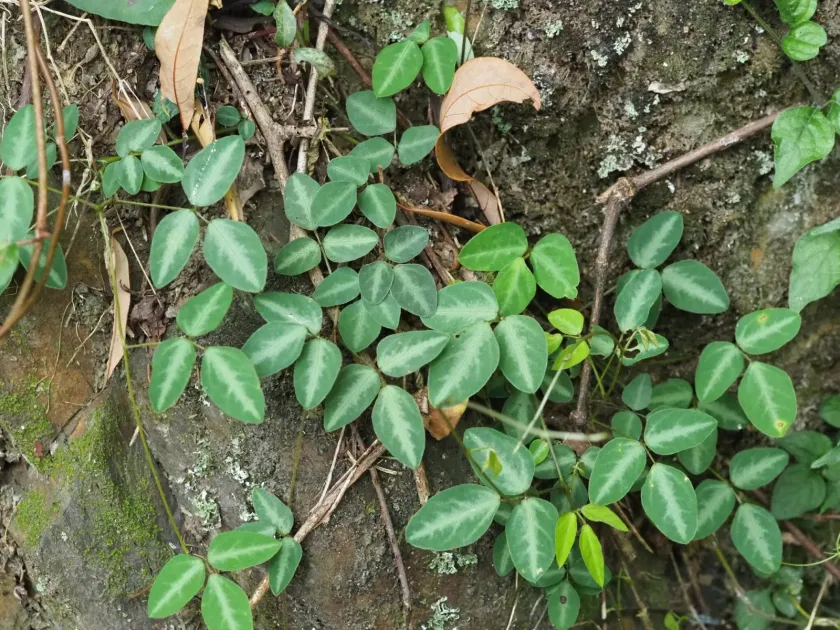
Description
Sowing dates
Dumasia villosa is a thermophilic legume, so sowing should only take place when the soil temperature has reached a stable level, typically in late spring. Early planting in cold soil can lead to poor germination and susceptibility to soil-borne pathogens.
The seeds should be sown at a depth of 3–5 cm in well-prepared, loose soil. Providing adequate moisture immediately after planting is crucial for the germination process, as the seed coat requires consistent hydration to break dormancy and initiate growth.
Row spacing should be managed to accommodate the plant's vining habit. Using support structures or appropriate density can improve air circulation and sunlight penetration, which are essential for vigorous growth and healthy development during the peak growing season.
Seeding rates are adjusted based on the specific purpose of the crop, whether for high-protein fodder production or green manure. Higher density is usually preferred for soil cover to suppress weed growth effectively, whereas lower densities are chosen for seed multiplication.
Rolling the soil after sowing can significantly enhance the success rate by ensuring better soil-to-seed contact. The initial development phase is critical, and keeping the area clear of competing vegetation is essential until the plant is established and capable of self-shading.
Growing requirements
As a member of the Fabaceae family, Dumasia villosa thrives in fertile, well-drained loamy soils with a neutral or slightly acidic pH. It performs poorly in compacted or waterlogged soils, which prevent root respiration and inhibit the activity of beneficial nitrogen-fixing bacteria.
This species is highly sensitive to cold and prefers warm, tropical or subtropical climates. It requires full sunlight to achieve maximum growth potential, although it can tolerate partial shade if humidity levels are consistent and temperatures remain favorable.
Water requirements are moderate, but consistent moisture is needed during the peak vegetative stage. While the plant can withstand short periods of dry conditions, prolonged drought will negatively affect leaf density and biomass production, making irrigation valuable in arid zones.
Fertilization management focuses on phosphorus and potassium to strengthen the stem structure and support vigorous root development. Nitrogen application is generally unnecessary, as the plant actively contributes to nitrogen fixation in the soil through root nodulation.
Cultural practices such as weeding and inter-row cultivation help maintain soil aeration. Once the vine forms a dense canopy, it naturally suppresses most weeds, reducing the need for chemical weed control during the later stages of the growing cycle.
Yield
The biomass yield of Dumasia villosa is substantial under optimal conditions, making it an excellent candidate for improving soil organic matter. The total output is largely determined by the length of the frost-free season and the availability of essential micronutrients.
For high-quality fodder, harvesting should occur before the onset of flowering, when the protein content is at its peak and the stems remain soft and digestible. Delayed harvesting leads to lignification of the vines, which significantly reduces the nutritional quality for livestock.
Seed production requires a long, stable warm season to allow for the complete maturation of the pods. In temperate zones, seed harvesting can be challenging due to early autumn frosts, necessitating the selection of the most exposed and warmest sites for seed crops.
As a green manure crop, its value lies in its ability to leave nitrogen-rich residues in the soil after decomposition. This improves the structural composition of the soil and provides a sustainable nitrogen source for the subsequent crop in the rotation cycle.
Micronutrient supplementation, particularly with molybdenum and boron, is known to boost the plant's nitrogen-fixing efficiency, which translates into higher overall yields. Regular monitoring of crop vigor allows for timely adjustments in management to ensure maximum productivity.
Main diseases and pests
Common fungal diseases, such as anthracnose and leaf spot, are the primary threats, especially in humid conditions with poor airflow. Preventative measures include proper spacing and selecting well-drained planting sites to minimize the risk of pathogen spread.
Insect pests, including aphids and various mites, can damage tender leaves and buds. Integrated pest management, focusing on biological controls and the preservation of natural predators, is recommended to keep pest populations below the economic injury level.
Soil-borne pathogens represent a significant risk, particularly during the germination phase. Treating seeds with authorized biological protectants can improve initial stand establishment and reduce the incidence of root rot diseases in early growth stages.
Maintaining spatial isolation from other legume crops is a best practice for preventing the transmission of species-specific viruses and pests. This distance serves as a buffer that protects the plantation from mass infestations occurring in adjacent fields.
In cases of severe infestation, targeted application of environmentally safe fungicides or insecticides is necessary. All pest management activities should be balanced with the intended final use of the plant, ensuring safety standards for either fodder or human consumption are met.