
Duboisia leichhardtii
Duboisia leichhardtii (F. Muell.) F. Muell.
Description
Sowing dates
Duboisia leichhardtii, commonly known as the corkwood tree, belongs to the Solanaceae family. It is a perennial shrub native to Australia, widely cultivated for its high content of alkaloids, specifically scopolamine and hyoscyamine, which are essential for pharmaceutical production.
Propagation is typically conducted in nurseries using seeds. Due to their slow germination rate, seeds require controlled environmental conditions, including constant humidity and moderate temperatures, to ensure successful seedling development before field transplantation.
Once seedlings reach the appropriate size, they are moved to open-field plantations. The planting density must allow for adequate airflow and light penetration, which are crucial for maintaining the plant's health and secondary metabolite synthesis.
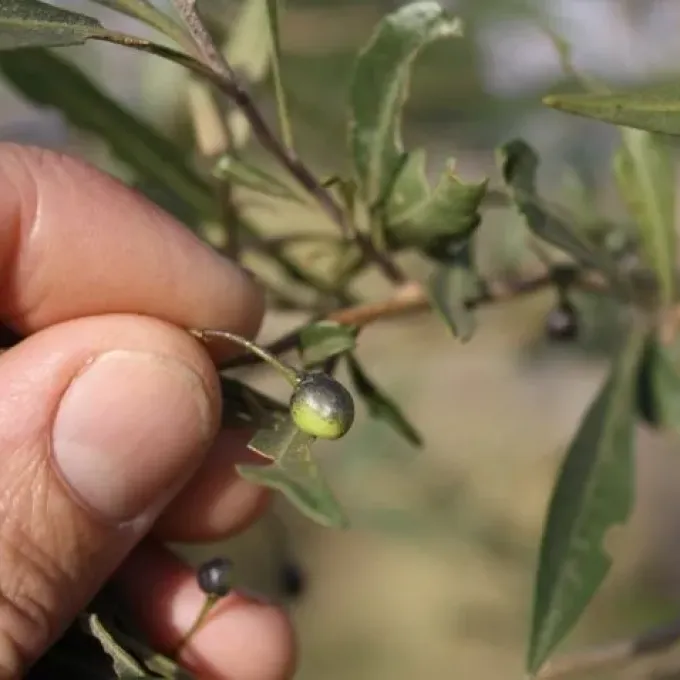
Botanically, the plant is characterized by a bushy habit with narrow, leathery leaves. These leaves are the primary source of the pharmacological compounds, making leaf area management a top priority for agricultural production.
Economically, Duboisia leichhardtii serves as a vital crop for the medical industry. The extraction of alkaloids from this species provides the foundation for various anti-nausea, anesthetic, and ophthalmological medications used globally.
Growing requirements
Successful cultivation requires well-drained, fertile soil. The plant does not tolerate waterlogging, so soil structure and drainage capacity are paramount. The pH should be slightly acidic to neutral to ensure optimal nutrient uptake from the soil profile.
Climate requirements are strict: the plant thrives in tropical and subtropical regions. It is highly sensitive to frost, which can cause severe damage to the foliage and stunted growth, limiting its large-scale cultivation to frost-free areas.
Water management is critical during the initial growth stages and periods of high transpiration. While the plant can tolerate brief dry spells, consistent irrigation schedules significantly increase biomass yield and alkaloid concentration within the leaf tissue.
Soil fertility management involves balanced N-P-K applications, with a focus on nitrogen to promote vegetative growth. Regular monitoring of the plant’s nutritional status through leaf analysis is recommended to adjust fertilization programs.
Mechanical cultivation for weed control must be performed with caution. Given the shallow nature of some root systems, aggressive tilling can damage the plant and introduce pathogens into the vascular system, leading to long-term decline.
Main diseases and pests
The crop faces pressure from various pests common to the Solanaceae family. Aphids and caterpillars are the most prevalent, often causing leaf damage and acting as vectors for viral infections that reduce the overall quality of the harvest.
Fungal pathogens causing root rot are a significant threat in poorly drained soils. The development of these fungi can be rapid, necessitating strict adherence to irrigation protocols and the use of preventative soil treatments.
Viral diseases represent a persistent challenge, often resulting in mosaic patterns and plant deformity. Effective management focuses on using certified virus-free planting material and rigorous control of insect vectors in and around the plantation.
Nematodes are another subterranean threat that can undermine plant vigor over multiple harvest cycles. Integrated pest management, including crop rotation and soil solarization, is often employed to mitigate the presence of these harmful organisms.
Protecting the plantation requires an integrated approach that minimizes chemical inputs. By maintaining plant health and soil biodiversity, growers can reduce the need for synthetic pesticides and ensure the production of clean, high-grade material.
Harvesting
Harvesting is based on the cyclical collection of leaves and young stems. The optimal timing is determined by laboratory assays that track the alkaloid concentration, which fluctuates according to the plant's physiological stage and seasonal conditions.
Manual harvesting or mechanical trimming is utilized to collect the foliage. Trimming must be executed at specific heights to preserve the plant's structure and ensure rapid recovery for subsequent harvests, making it a multi-year operation.
Post-harvest management is critical. Freshly harvested leaves have high water content and must be transported immediately to a drying facility to prevent enzymatic degradation or microbial spoilage, which could lower alkaloid potency.
Drying is typically performed in forced-air dryers. Controlling the temperature is essential; temperatures exceeding 60°C can destabilize the desired chemical compounds, resulting in a loss of economic value for the pharmaceutical processor.
Once dried, the raw material is packed into moisture-resistant containers. Storage facilities must maintain a cool, dry, and dark environment to preserve the chemical integrity of the alkaloids until they are transported for final extraction.