
Duboisia myoporoides
Duboisia myoporoides R. Br.
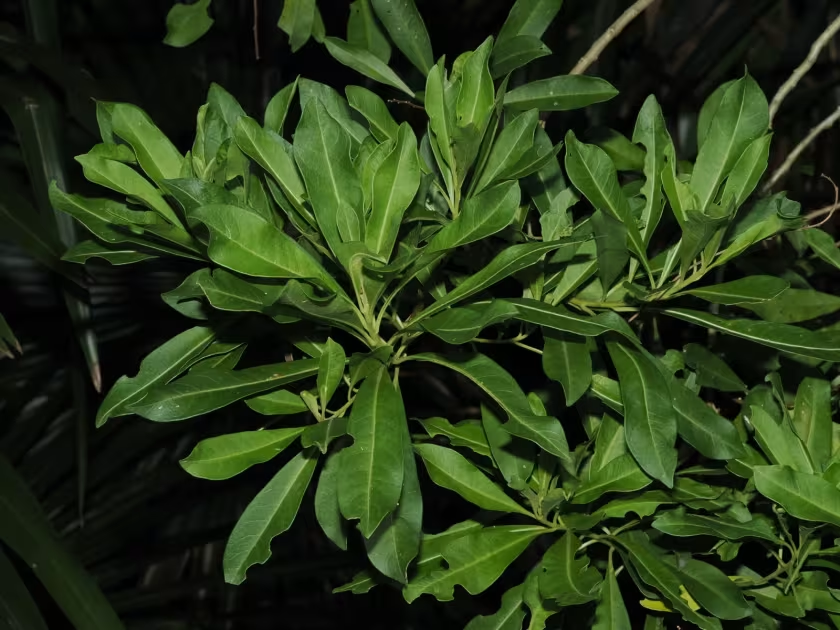
Description
Sowing dates
Duboisia myoporoides is typically propagated via seeds or vegetative cuttings. Due to the small size of the seeds, nursery conditions with controlled temperature and humidity are essential for successful germination.
Seeds should be sown in a high-quality, well-draining potting substrate. Maintaining a constant temperature between 20–25°C is crucial for uniform emergence, followed by adequate light exposure to support healthy seedling development.
Vegetative propagation is commonly used to maintain genetic uniformity, utilizing semi-hardwood cuttings. Cuttings require high humidity and warmth to develop a strong root system, allowing for faster establishment in the field.
Transplanting into the open field should only occur after the risk of frost has passed, as the species is highly sensitive to cold temperatures. Planting density is adjusted based on the soil quality and specific requirements for foliage harvesting.
Young plants require vigilant irrigation and protection from harsh sunlight during the initial establishment phase. A gradual hardening-off process is recommended to ensure the plants can withstand environmental stressors in the open field.
Growing requirements
Duboisia myoporoides is an evergreen shrub or small tree belonging to the Solanaceae family. It is native to the coastal rainforests of eastern Australia and New Caledonia, where it thrives in humid subtropical environments.
The plant prefers fertile, well-drained loamy soils with a neutral or slightly acidic pH. Waterlogging must be avoided at all costs, as the roots are highly susceptible to decay in anaerobic soil conditions.
Sunlight is a limiting factor for the production of tropane alkaloids such as scopolamine and hyoscyamine. Plants grown in full sun generally exhibit higher concentrations of these compounds compared to those kept in partial shade.
The climate must be consistently warm, as Duboisia myoporoides does not tolerate freezing temperatures. In regions with cooler climates, greenhouse or indoor production is necessary to prevent significant plant damage.
Modern agronomic practices for this crop include drip irrigation and specialized fertilization programs. Ensuring a proper balance of nutrients is key to promoting vigorous vegetative growth and maximizing biomass yield per hectare.
Yield
The primary harvest product is the foliage (leaves and tender stems), which contains the highest concentrations of medicinal alkaloids. Yield efficiency is heavily dependent on the management of plant age and harvest frequency.
Initial harvesting typically begins in the second year after planting once the plant has established a sufficient canopy. In subsequent years, multiple harvests per season are possible under optimal growing conditions.
Harvesting strategies must balance the need for biomass with the plant's recovery capacity. Leaving sufficient foliage on the bushes ensures that the plant remains healthy and continues to produce high levels of alkaloids.
Alkaloid content varies significantly based on plant genetics, environmental factors, and the timing of harvest. Selective breeding programs focus on developing high-yielding cultivars specifically for pharmaceutical extraction.
The final yield is measured not just by dry weight, but by the extractable alkaloid content. Precision farming and regular analytical testing are integral to the commercial production of this high-value medicinal crop.
Main diseases and pests
Duboisia is prone to common Solanaceous pests, including aphids, which can act as vectors for various plant viruses. Regular field monitoring is essential to manage pest populations before they cause significant damage.
Fungal pathogens such as root rot and phytophthora are major threats, especially when soil moisture is poorly managed. Crop rotation and proper field sanitation are standard preventive measures used by commercial growers.
Nematode infestations can be particularly devastating in sandy soils. Pre-planting soil treatment and the use of certified pathogen-free nursery stock are necessary to prevent the establishment of these soil-borne pests.
In greenhouse settings, spider mites can thrive if the humidity levels are too low. Maintaining appropriate microclimate conditions and implementing integrated pest management are effective control strategies.
The use of pesticides must be strictly regulated to ensure the final product meets pharmaceutical safety standards. Minimal use of chemicals is preferred, especially as the plants approach the maturity stage for harvesting.
Harvesting
Harvesting is performed manually or with specialized machinery depending on the size of the plantation. The ideal time for harvest is during periods of active growth, which correlates with peak alkaloid content.
Post-harvest, leaves must be separated from thicker branches to facilitate faster drying. This prevents the initiation of enzymatic processes that can degrade the volatile and active pharmaceutical compounds.
Drying occurs in controlled environments with forced air circulation at temperatures kept below 50°C. Excessive heat can destroy the very compounds that make this crop valuable for the pharmaceutical industry.
Dried leaves are packaged in airtight, light-protected containers to prevent moisture absorption and degradation. Proper warehouse management is vital to preserve the quality of the raw material until shipment.
Each harvested batch undergoes comprehensive analytical quality control to determine the concentration of active pharmaceutical ingredients, ensuring that the supply meets industry-mandated specifications.