
Drakaea glyptodon
Drakaea glyptodon
Description
Growing requirements
Drakaea glyptodon, commonly known as a type of hammer orchid, belongs to the Orchidaceae family. It is not an agricultural crop but a highly specialized native wildflower endemic to the southwestern regions of Western Australia, requiring specific environmental conditions that cannot be replicated in farming.
The plant thrives in sandy, nutrient-poor soils found in heathlands and woodland areas. Its growth pattern is strictly seasonal, characterized by a single leaf emerging in the cool, wet winter and a dormant period during the hot, dry Australian summer, where it remains as an underground tuber.
A critical requirement for Drakaea glyptodon is its obligate symbiosis with specific mycorrhizal fungi in the soil. These fungi are essential for the germination of its dust-like seeds and for providing nutrients to the adult plant, which makes cultivation in standard nursery substrates unsuccessful.
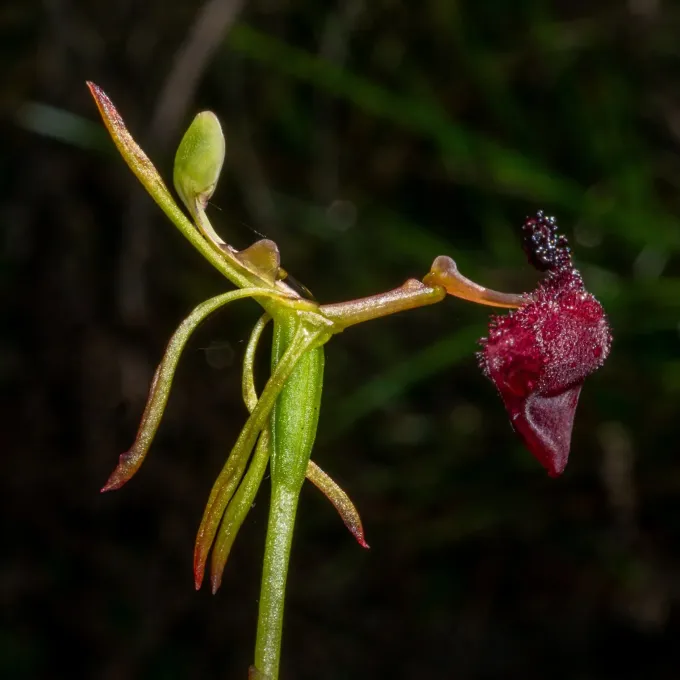
The botanical highlight of this species is its extraordinary pollination strategy. The labellum of the flower is shaped and scented to mimic a female thynnid wasp. This sexual deception lures male wasps to attempt mating, inadvertently leading to the transfer of pollinia and ensuring the reproduction of the orchid.
Given its complex life cycle, dependency on specific insect populations, and strict soil requirements, the species is considered a flagship for conservation rather than an economic asset. Any disturbance to its fragile habitat can lead to the local extinction of this sensitive orchid.