
Indian docynia
Docynia indica
Description
Growing requirements
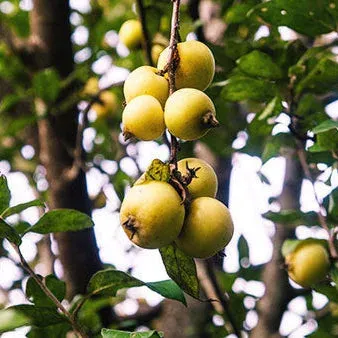
Indian docynia (Docynia indica) is an evergreen or semi-deciduous tree belonging to the Rosaceae family. It typically grows as a medium-sized tree, reaching heights of 6 to 10 meters, featuring a dense, spreading canopy with dark green foliage that provides significant shade.
The species is native to the Himalayan foothills and is distributed across parts of South and Southeast Asia, including Nepal, India, and China. It thrives in temperate mountain regions, showing remarkable adaptation to the specific climatic conditions of high-altitude ecosystems.
This tree prefers well-drained loamy soils with a neutral or slightly acidic pH level. Consistent soil moisture is essential for the tree's health, particularly during the stages of flowering and fruit development, although the plant is relatively resilient once established.
Indian docynia grows best in areas with ample sunlight, typically at elevations ranging from 1000 to 2500 meters. The species displays significant tolerance to various environmental conditions, making it a robust choice for reforestation and agroforestry initiatives in mountainous areas.
Agricultural practices for this tree involve regular canopy pruning to promote better air circulation and sunlight penetration. Adding organic matter to the soil during the pre-blooming season helps maintain nutrient levels and improves overall tree productivity.
Yield
The fruits of the Indian docynia are pome-like, often resembling small apples or pears. They are rich in pectin, organic acids, and various vitamins, making them highly valued for processing. They are rarely consumed fresh due to their firm texture and tart taste profile.
Culinary uses for these fruits include the production of jams, jellies, preserves, and traditional fermented beverages. In many local communities, the fruit is sliced and dried, which helps preserve its nutritional properties for extended use throughout the year.
Beyond its edible fruits, the wood of the Indian docynia is highly regarded for its density and hardness. It is frequently utilized in local carpentry, agricultural tool handles, and traditional construction, underscoring the tree's value as a versatile natural resource.
The crop offers significant economic potential for small-scale farmers in remote areas where traditional orchard fruits struggle to flourish. Developing a market for docynia products can improve local livelihoods and support sustainable agricultural practices.
Harvesting is usually done by hand once the fruits reach physiological maturity. Careful handling during and after harvest is crucial to maintain fruit quality, as they are intended for further processing rather than immediate fresh-market retail sales.
Main diseases and pests
Indian docynia is susceptible to several diseases common to the Rosaceae family, including apple scab and powdery mildew. These fungal infections are more prevalent in regions with high humidity or during seasons with prolonged rainfall, requiring careful management.
Common insect pests include aphids, scale insects, and various types of fruit-boring larvae that can damage the fruit set. Integrated pest management (IPM) strategies, which prioritize biological controls and habitat management, are recommended to maintain tree health.
Prevention remains the most effective strategy, involving the removal of dead or infected branches and maintaining proper spacing between trees. Cleanliness in the orchard reduces the spread of spores and inhibits the colonization of various pest populations.
When chemical intervention is necessary, it is essential to use products that are safe for the surrounding environment and beneficial pollinators. Applications should be timed to avoid flowering periods to protect the natural balance of the ecosystem.
Ongoing monitoring of the trees is essential for identifying early symptoms of infestation or disease. By detecting problems early, growers can intervene with targeted, minimal-impact solutions, ensuring the long-term vitality of the docynia orchard.