
Dischisma capitatum
Dischisma capitatum
Description
Growing requirements
Dischisma capitatum is a distinct plant species belonging to the Scrophulariaceae family. It is natively found in the Cape region of South Africa, where it has evolved to thrive in specific mediterranean-type climates characterized by winter rainfall and hot, dry summers.
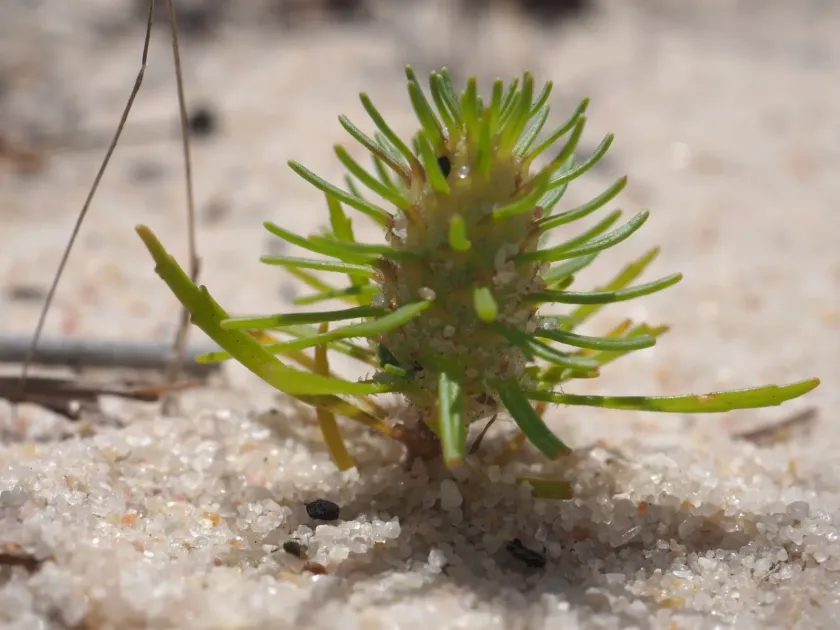
The botanical structure of the plant consists of a compact herb with dense, capitate inflorescences, from which its name is derived. The foliage is typically narrow, often exhibiting adaptations such as trichomes to reduce transpiration during the harsh summer months.
Regarding soil requirements, the plant prefers well-drained, nutrient-poor substrates, particularly sandy or rocky soils. It is highly intolerant of waterlogging, making proper site selection crucial for ensuring root health and preventing fungal rot in cultivated environments.
Cultivation practices must focus on imitating the plant's natural habitat. It requires full sun exposure to maintain its compact growth form and to encourage consistent flowering cycles. Over-fertilization should be strictly avoided as the species is adapted to low-fertility conditions.
In terms of agricultural and landscape utility, Dischisma capitatum is primarily utilized for ecological restoration and xeriscaping. While not a conventional staple crop, its drought tolerance makes it a subject of interest for sustainable agricultural projects in arid and semi-arid regions.