
Diphylleia sinensis
Diphylleia sinensis
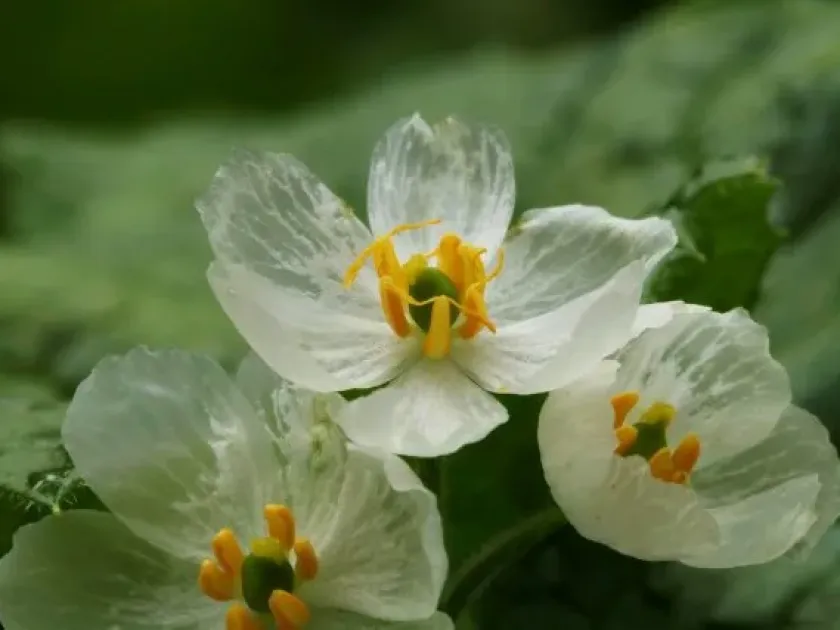
Description
Growing requirements
Diphylleia sinensis, commonly known as the Chinese umbrella leaf, is a distinctive perennial plant belonging to the Berberidaceae family. Originating from the shaded mountain forests of China, it is highly valued for its unique botanical trait where petals turn translucent upon contact with water.
This species thrives in woodland conditions characterized by consistent moisture and high levels of soil organic matter. Cultivators must ensure a site with deep or partial shade, as direct exposure to harsh sun rays can cause irreversible leaf scorch and plant desiccation.
The soil structure is of paramount importance; it must be well-draining yet moisture-retentive. Incorporating compost, peat moss, or decomposed forest leaf litter creates the ideal acidic to neutral environment required for optimal root development and plant health.
Climatic requirements involve cool, temperate conditions. While the plant exhibits significant winter hardiness, it requires a stable environment throughout the growing season to flourish. Adequate air circulation is necessary to prevent physiological disorders in the dense foliage.
Agronomic management includes maintaining a thick layer of organic mulch to regulate soil temperature and conserve moisture. Fertilizer applications should be minimal and focused on organic sources during early spring to support the initial surge of vegetative growth.
Main diseases and pests
The primary threats to Diphylleia sinensis are fungal pathogens such as root rots that proliferate in waterlogged conditions. Proper soil drainage and avoiding overhead irrigation during humid periods are the best preventative agronomic measures.
Pest management focuses largely on gastropods like slugs and snails, which are attracted to the succulent foliage. Monitoring during damp periods is essential, and physical barriers or non-toxic traps are the recommended control methods for sustainable cultivation.