
Fava d'anta
Dimorphandra mollis
Description
Growing requirements
Fava d'anta, or Dimorphandra mollis, is a prominent tree species belonging to the Fabaceae family, native to the Brazilian Cerrado biome. It is highly adapted to tropical savannas characterized by distinct wet and dry seasons, thriving in nutrient-poor but well-drained soils.
The tree requires significant solar radiation to maintain its growth cycle and shows excellent resilience to prolonged water stress. For successful cultivation, it is essential to provide sites with minimal waterlogging risks, as the root system is highly sensitive to soil compaction and poor drainage.
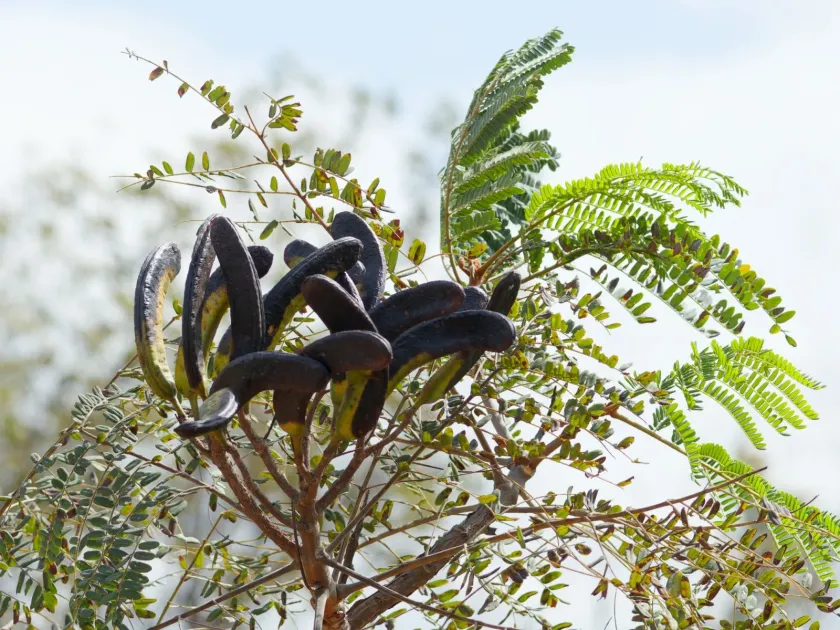
Botanically, the tree features pinnate leaves and distinctive yellow flowers organized in racemes. The fruits are woody, legume-like pods, which contain the valuable phytochemicals that make the tree economically important for the pharmaceutical industry.
In terms of agricultural management, this species is often studied for agroforestry systems in tropical regions due to its low demand for intensive fertilization. It naturally interacts with soil microorganisms, which helps it maintain productivity in challenging environments.
The main commercial value of this species lies in its high concentration of flavonoids, specifically rutin, found in the fruit pods. This compound is widely used in medicine to treat vascular conditions and maintain arterial health, driving the demand for sustainable cultivation.
Harvesting
Harvesting of Dimorphandra mollis fruits is typically performed once the pods reach maturity and begin to dry on the tree. The efficiency of the harvest relies on timing, ensuring the pods are collected before extreme moisture exposure to prevent secondary fungal colonization.