
Didymocarpus aurantiacus
Didymocarpus aurantiacus
Description
Growing requirements
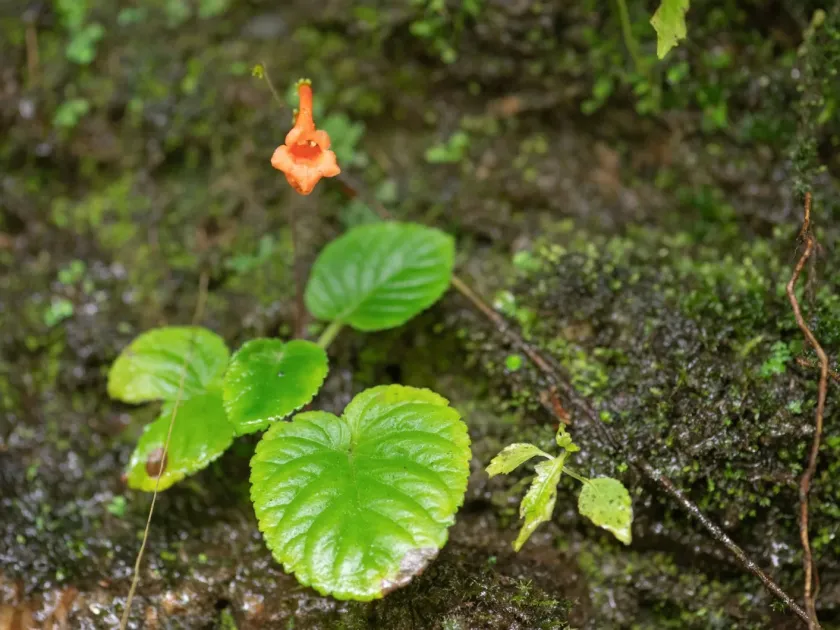
Didymocarpus aurantiacus is a rare perennial herbaceous plant belonging to the Gesneriaceae family. Originating from the humid forests of Southeast Asia, it is highly valued by botanists and collectors for its distinctive orange flowers and complex foliage structure.
Successful cultivation requires a climate that mimics its natural tropical habitat. Key environmental parameters include a high relative humidity level and a stable temperature range, avoiding cold drafts and direct, intense sunlight which can cause leaf burn.
The substrate must be exceptionally well-draining, mimicking forest floor debris. A mixture of peat moss, pine bark, perlite, and a small portion of horticultural charcoal is generally recommended to provide the necessary aeration and moisture retention for the roots.
Agrotechnical maintenance focuses on precise irrigation, ensuring the water temperature is slightly above ambient levels. Regular, diluted fertilizing sessions should only occur during the active growing season, utilizing balanced fertilizers formulated for gesneriads.
The primary economic application of this species is in the horticultural industry as an ornamental plant. It is widely used in high-end greenhouse collections and conservatories where controlled environments allow for the display of exotic and rare plant species.
Main diseases and pests
The most significant threats to Didymocarpus aurantiacus are fungal infections, particularly Phytophthora and Pythium, which manifest rapidly when drainage is insufficient. Preventive measures include regular sanitation and the use of sterile growing media.
Insect pests such as fungus gnats and spider mites are frequent invaders in greenhouse conditions. Managing these threats involves careful monitoring of soil moisture to deter gnats and increasing humidity or using insecticidal soaps to control mite populations.