
Egyptian didesmus
Didesmus aegyptius
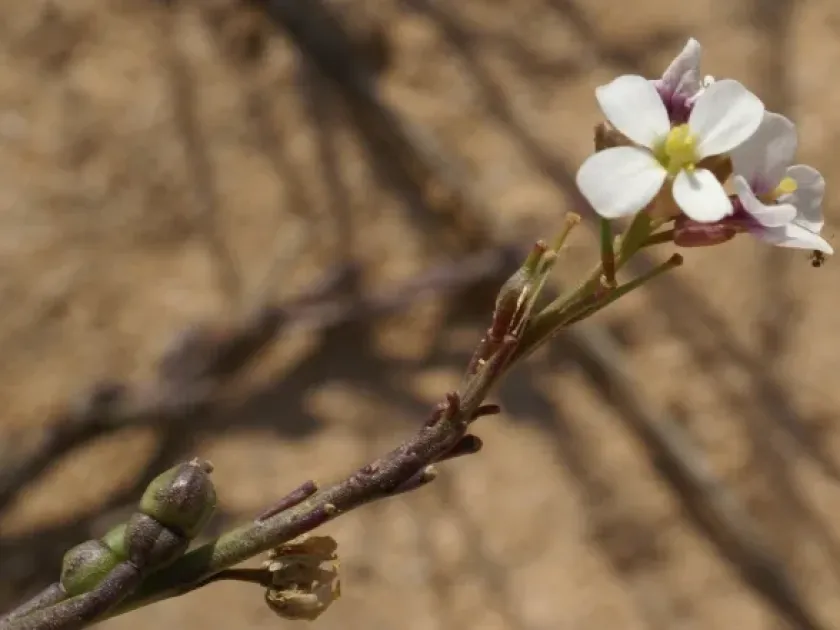
Description
Growing requirements
Egyptian didesmus (Didesmus aegyptius) is a member of the Brassicaceae family, characterized by its annual life cycle and high adaptability to semi-arid climates. It is primarily observed in regions with Mediterranean-like conditions.
The plant originates from North Africa and the Mediterranean basin. It typically thrives in well-drained, sandy, or rocky soils, showcasing high tolerance to heat and low water availability, which are common limiting factors in these environments.
Botanically, Didesmus aegyptius is noted for its distinctive siliques that segment into smaller pieces. Its foliage is often pubescent, which serves as a physiological adaptation to reduce transpiration in dry conditions.
The environmental requirements for growth include full sun exposure and a relatively short vegetation period. It is capable of completing its lifecycle rapidly when early seasonal rains occur, ensuring seed production before the peak of drought.
Agricultural management primarily focuses on weed suppression in fields where this species might compete with grain or pulse crops. Crop rotation and mechanical weeding remain the most effective methods to manage its presence in agricultural fields.
Main diseases and pests
As a wild relative of cultivated crops in the Brassicaceae family, Didesmus aegyptius can act as an alternative host for various pests and diseases that affect commercial agriculture.
Diseases such as black rot or sclerotinia can be harbored by these plants, creating a permanent source of infection within or near cultivated fields if not properly managed.
Insect pests, including cabbage aphids and flea beetles, are frequently found on this plant. These insects can migrate to crop fields, causing significant economic damage if the population density is not suppressed.
Monitoring for this species is a standard component of integrated pest management (IPM) in regions where this plant is endemic, helping to reduce the overall chemical load in the field.
Standard phytosanitary practices, including the use of targeted herbicides and maintenance of field margins, are recommended to control its proliferation and minimize risks to nearby crops.