
Dicorynia paraensis
Dicorynia paraensis Benth.
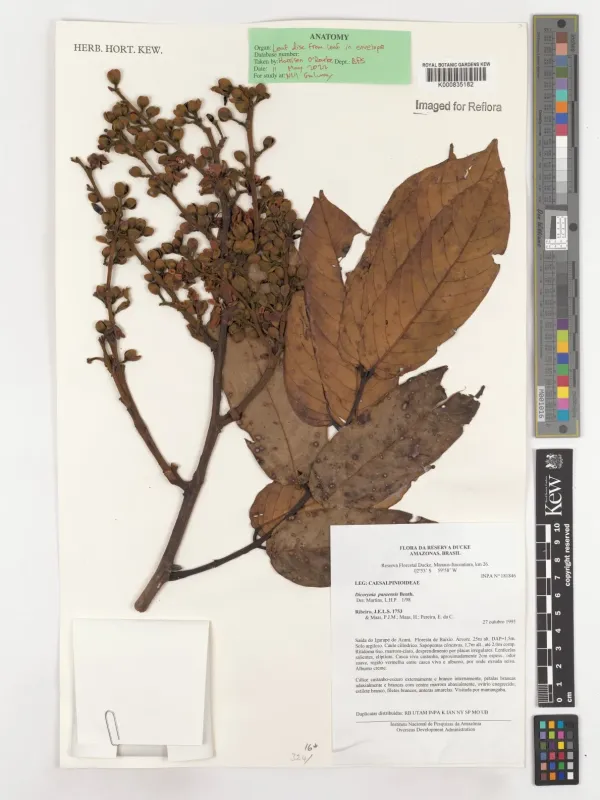
Description
Growing requirements
Dicorynia paraensis is a large tropical tree species belonging to the Fabaceae family. Known in the trade as Angelique, it typically reaches heights of up to 30–40 meters, characterized by a straight and cylindrical bole highly sought after in forestry.
The native habitat includes the tropical rainforests of South America, primarily within the Amazon basin. The tree thrives in regions with high precipitation and well-drained soils, which are typical of the humid equatorial belt.
The culture requires stable environmental conditions, preferring sites with minimal seasonal variation. It is naturally adapted to growth in forest gaps or under light shade, necessitating careful light management during the initial growth stages in forest plantations.
Modern silviculture practices for this species focus on sustainable growth. Seedlings require early intervention to manage competition from weeds and climbing plants, ensuring that the young trees can establish themselves effectively without nutrient deficiencies.
Propagation is primarily carried out through seeds. In nurseries, it is essential to maintain optimal moisture and light filtration levels to mimic natural germination conditions, which significantly improves the survival rate of the saplings.
Yield
The primary economic value of Dicorynia paraensis lies in its exceptionally durable timber. Angelique wood is renowned for its high density, mechanical strength, and natural resistance to decay, making it a premium choice for industrial applications.
Due to its resilience against marine borers and moisture, the timber is extensively used in heavy construction, including bridge building, wharf construction, and harbor structures. It serves as a reliable alternative to chemically treated wood.
The timber is also highly regarded in the high-end furniture industry and for architectural flooring. Its distinct texture and long lifespan contribute to the production of high-value finished goods that withstand harsh conditions over decades.
Industrial harvesting is managed under strict reforestation protocols. Because the species has a relatively slow natural growth cycle, forest managers implement selective harvesting techniques to maintain ecosystem balance while meeting market demand.
Long-term investment in this species provides a sustainable source of high-quality raw material. By integrating forest conservation with planned extraction, landowners ensure the continuity of this valuable biological resource for future generations.
Main diseases and pests
The species faces threats primarily from specific fungal pathogens that target wood under high-humidity conditions. Monitoring systems in managed plantations are crucial to prevent the spread of diseases among healthy trees.
Wood-boring insects and termites can pose significant risks to young or stressed specimens. Integrated pest management (IPM) strategies are applied to control insect populations and protect the integrity of the timber and overall tree health.
Land-use change and illegal logging remain the most critical threats to native populations. International initiatives and certification standards play a vital role in protecting remaining forest fragments and promoting responsible forest practices.
Environmental shifts and irregular precipitation patterns may affect the growth rates of this species. Research into climate-resilient silvicultural techniques is ongoing to ensure the long-term viability of plantation-grown trees.
Routine diagnostic inspections of the bark and foliage are recommended to identify early signs of physiological stress. Maintaining healthy forest stands requires active management to mitigate the impact of both biotic and abiotic stressors.