
Dicorynia guianensis
Dicorynia guianensis Amshoff
Description
Growing requirements
Dicorynia guianensis is a prominent tree species belonging to the Fabaceae family, native to the tropical rainforests of the Guiana Shield in South America. It is widely recognized in the timber industry by its commercial name, Angelique.
The species thrives in tropical environments with high annual precipitation and consistent temperatures. It is a light-demanding tree, typically found in the emergent layer of primary forests where it competes for canopy space.
Regarding soil requirements, the tree prefers deep, well-drained loamy soils. It avoids waterlogged areas, and proper drainage is critical for the development of healthy root systems, especially in plantation settings.
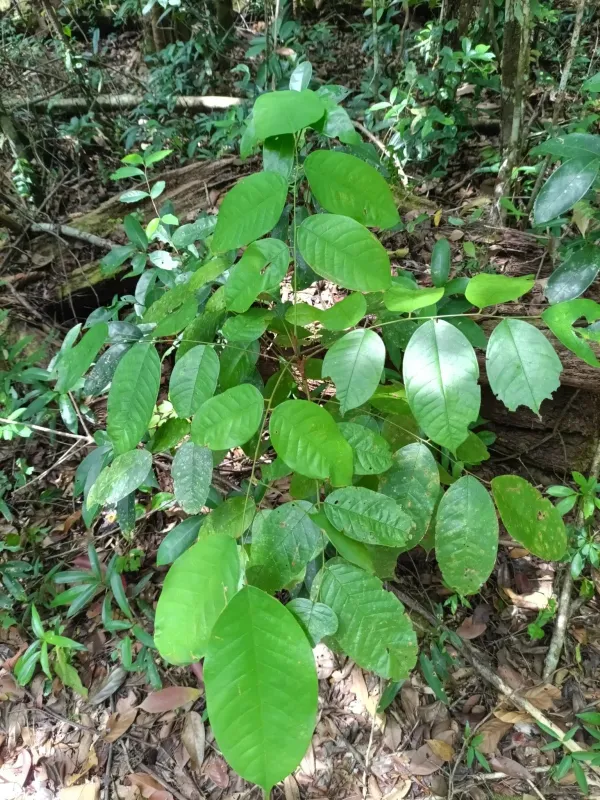
Botanically, it is characterized by its significant height and robust trunk. The tree produces complex leaves and fruit pods that contribute to its reproductive success in its endemic habitat, serving as a food source for local fauna.
Maintenance of these trees requires attention to microclimate conditions, as they are most vulnerable during the early stages of establishment. Once mature, the trees become resilient components of the ecosystem.
Harvesting
The primary economic focus for Dicorynia guianensis is the harvesting of its high-quality timber. The wood is esteemed globally for its density, durability, and resistance to environmental degradation.
Angelique wood is naturally resistant to fungal decay, termites, and marine borers. This natural durability makes it a preferred material for heavy construction, maritime works, and exterior flooring projects.
Sustainable harvesting practices are essential, as the exploitation of these trees is strictly regulated in countries like French Guiana and Suriname to prevent deforestation and maintain ecological balance.
The wood is easy to work with despite its density, which allows for versatile applications in fine carpentry, high-traffic industrial flooring, and long-lasting structural components in engineering.
Effective forest management practices incorporate long-term planning for Dicorynia guianensis, balancing industrial demand for high-value timber with conservation efforts to ensure the survival of the species in the wild.