
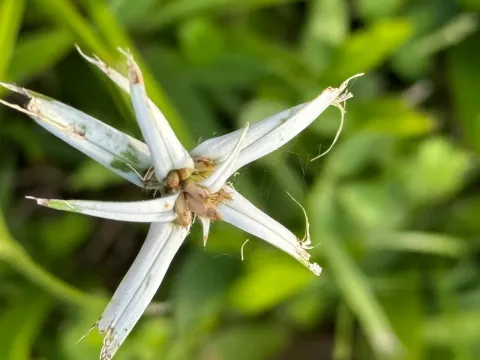
Dichromena
Dichromena
Dichromena, commonly known as white-topped sedge or star grass, belongs to the family Cyperaceae. It is a perennial herbaceous plant native to the tropical and subtropical regions of the Americas, known for its distinct appearance.
What the section contains

Dichromena
The plant features slender, upright stems topped with leaf-like bracts that exhibit striking white, star-shaped patterns at their bases. This unique morphology makes it a popular choice for aquatic and marginal landscaping.
Regarding cultivation requirements, Dichromena is highly hygrophilous. It thrives in saturated soils, marshy areas, and along the edges of water features, where moisture levels remain consistently high throughout the growing season.
The plant prefers full sun to partial shade. Exposure to direct sunlight is essential for the development of the vivid white coloration on the bracts, which is the primary ornamental feature of this species.
Soil quality should be rich in organic matter with a slightly acidic to neutral pH. Proper moisture management is the most critical aspect of its agrotechnology, as the plant lacks any significant drought-tolerance mechanisms.
The primary threat to the health of Dichromena is soil dehydration. Because it is naturally adapted to wetland environments, any reduction in soil moisture leads to rapid wilting and necrosis of the delicate leaf tissue.
Fungal pathogens represent the main biological threat, particularly when soil drainage is poor or water remains stagnant during cool weather. Root rot can manifest quickly, requiring immediate intervention to save the plant cluster.
Pest pressure is generally low. However, in enclosed greenhouse environments or indoor settings, spider mites can occasionally colonize the foliage. Frequent misting and maintaining proper ventilation help manage these populations.
Preventative maintenance includes the removal of senescent leaves and stalks. By keeping the plant clean, gardeners reduce the substrate available for fungal growth and ensure that the remaining healthy tissue receives adequate light.
Care must be exercised during site preparation and weeding. As a member of the sedge family, Dichromena has relatively fragile surface roots that are easily damaged by mechanical tools, suggesting that hand-weeding is the preferred method.