
Dichromanthus cinnabarinus
Dichromanthus cinnabarinus
Description
Growing requirements
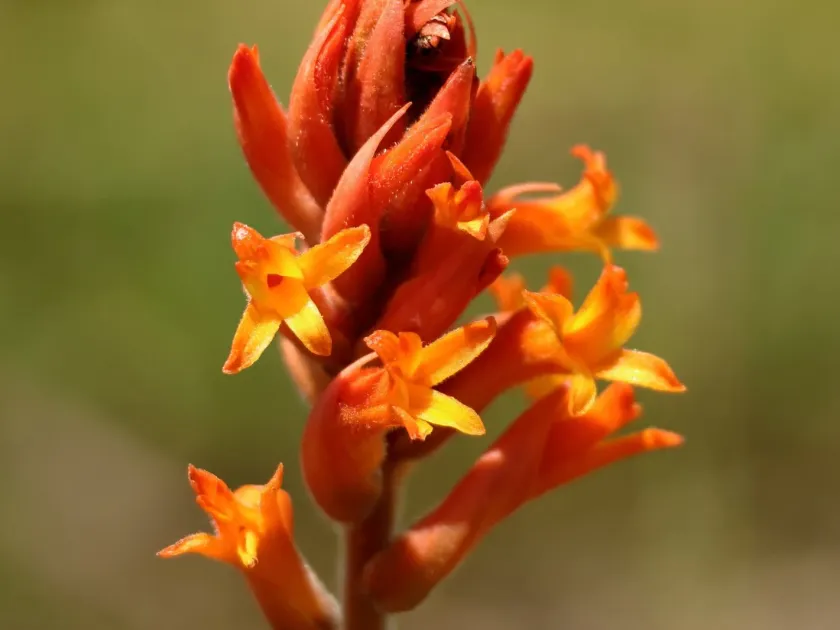
Dichromanthus cinnabarinus is a species of terrestrial orchid belonging to the Orchidaceae family. It is recognized for its unique, intense cinnabar-colored flowers that grow on an elongated spike.
The plant originates from the mountainous regions of Mexico and parts of the southwestern United States. It naturally thrives in grasslands and open, rocky slopes where it experiences distinct seasonal temperature fluctuations.
Botanically, it features succulent-like root tubers that serve as reservoirs for water, allowing the plant to survive in semi-arid environments. The vegetative growth typically emerges after a dormancy period triggered by temperature changes.
Cultivation requires a highly specific, well-draining mineral-based substrate. It is essential to ensure that the growing medium does not retain excessive moisture, as the fleshy roots are highly susceptible to rot.
Light intensity is a critical factor for successful growth; the plant performs best in bright, indirect light. Proper air circulation is also mandatory to prevent the accumulation of moisture around the foliage and crown.
Main diseases and pests
The primary threats to Dichromanthus cinnabarinus involve fungal pathogens linked to poor drainage. Root and crown rot are the most common issues reported in greenhouse cultivation.
Pests such as mealybugs often congregate in the tightly packed leaf bases, making them difficult to detect until the plant starts showing signs of stunted growth.
Spider mites are a common challenge when the plant is kept in environments with low relative humidity, leading to leaf discoloration and weakened immunity.
Bacterial soft rot can occur if water remains on the leaves for prolonged periods, especially in lower temperature conditions where evaporation is minimal.
Regular monitoring, combined with a preventative schedule of applications using systemic fungicides and mild horticultural oils, is necessary for maintaining healthy plants.