
Dichrocephala integrifolia
Dichrocephala integrifolia
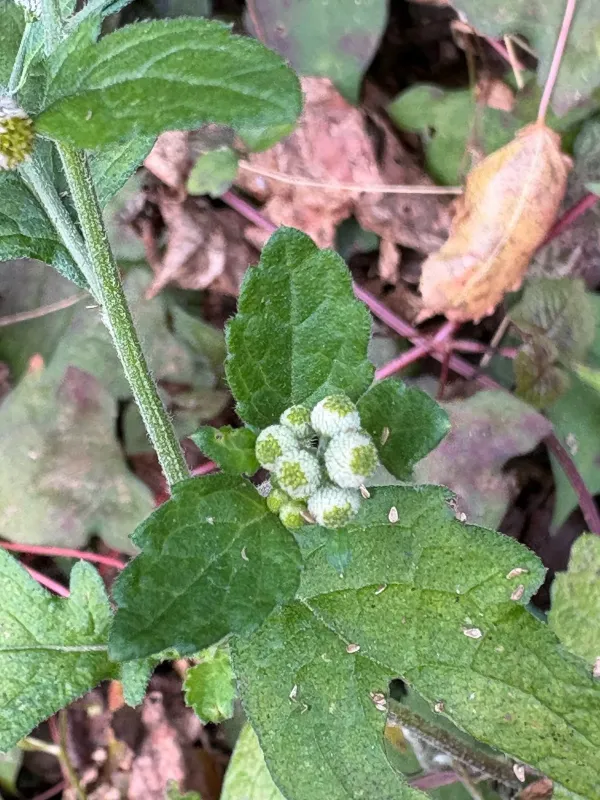
Description
Sowing dates
Dichrocephala integrifolia is an annual herbaceous plant belonging to the Asteraceae family. Known for its rapid growth cycle, it is often utilized in both traditional medicine and as a specialized agricultural crop.
Sowing should ideally occur in the spring, once soil temperatures consistently reach 15–18 degrees Celsius. Direct drilling is commonly used, with row spacings of 30–40 cm to allow for sufficient plant spread.
For regions with shorter growing seasons, starting seedlings in trays 4–6 weeks prior to the frost-free date can improve overall crop uniformity and early yields.
Seeds are small and require shallow placement, ideally no deeper than 1 cm, to ensure successful germination. Soil should be pressed firmly against the seeds to maintain moisture contact.
Because the plant can be prolific in seed production, management of the subsequent generation is necessary to prevent it from becoming an unwanted weed in crop rotation cycles.
Growing requirements
Dichrocephala integrifolia thrives in moist, well-drained soils. It exhibits a preference for fertile, loamy substrates that are rich in organic matter and have a neutral pH.
Abundant sunlight is critical for this species, as it promotes the synthesis of essential oils and other secondary metabolites that are essential for its medicinal efficacy.
The plant performs best in moderate climates, with an optimal temperature range of 20–25 degrees Celsius. It does not tolerate prolonged frost and requires protection or indoor cultivation in colder zones.
Regular irrigation is necessary throughout the active growing season. The plant is highly sensitive to water stress, and moisture levels should remain consistent to prevent premature bolting.
Keeping the area free of weeds is essential during the early developmental stages, as the young seedlings are not highly competitive against faster-growing grasses.
Yield
The productivity of Dichrocephala integrifolia depends significantly on soil fertility and nitrogen management during the vegetative phase. Optimal nutrition can lead to robust, leafy plant development.
Expected yields for dry aerial biomass can range from 1.5 to 3 metric tons per hectare under well-managed agricultural conditions with supplemental irrigation.
The biomass is most valuable when harvested just before or at the beginning of the flowering stage, as this is when the concentration of therapeutic compounds is at its peak.
With careful management, the crop can sometimes support multiple cuttings if the environmental conditions remain favorable and the plant is cut high enough to encourage regrowth.
Post-harvest handling is critical, as the quality of the end product is highly dependent on how quickly the biomass is moved from the field to the drying site.
Main diseases and pests
Root rot is the most significant threat, particularly in soils with poor drainage or during seasons with excessive precipitation. Ensuring soil aeration is a primary preventative measure.
Powdery mildew can affect the foliage in humid, poorly ventilated conditions. Strategic plant spacing and thinning help maintain the airflow necessary to minimize fungal pathogen development.
Aphids and spider mites are common pests that colonize the leaves. Integrated pest management, including the use of biological control agents, is recommended to avoid chemical residues in medicinal crops.
Slugs and snails can cause significant damage to young plants. Implementing physical barriers or traps during the early establishment phase is advised.
Crop rotation is mandatory to break the life cycles of soil-borne diseases and pests that may target the Asteraceae family.
Harvesting
Harvesting is typically performed by mowing the aerial parts of the plants at a height of approximately 5–10 cm above the ground. This preserves the lower nodes for potential regrowth.
Harvesting should be completed on dry days after the morning dew has evaporated to ensure the material is free of surface moisture, which facilitates safer drying.
Immediate transportation to the drying facility is vital to prevent fermentation or mold, which can destroy the essential oils and lower the value of the botanical product.
Drying should take place in shaded, well-ventilated areas or in temperature-controlled drying cabinets set below 40 degrees Celsius to maintain chemical integrity.
Once dried, the crop must be stored in airtight, moisture-proof containers in a cool, dark environment to protect its potency and shelf life.