
Konjac
Amorphophallus rivieri Durieu
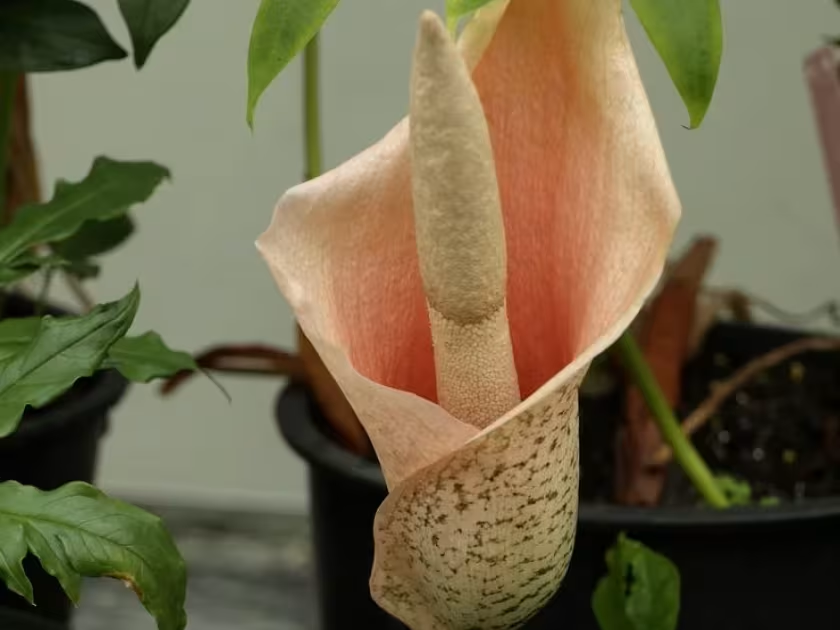
Description
Sowing dates
Amorphophallus rivieri, commonly known as Konjac, is a perennial tuberous plant belonging to the Araceae family. In industrial farming, the crop is primarily propagated vegetatively by using small cormels that develop around the main tuber.
Planting is performed in spring once the soil temperature is consistently above 15-18 degrees Celsius. Careful site selection is necessary to ensure adequate soil drainage and protection from extreme elements.
If utilizing seeds, they must be sown immediately after maturation as they rapidly lose viability. Seedlings require a controlled, warm environment to survive their first season of growth.
The planting depth is determined by the size of the tuber, typically ranging from 10 to 20 cm. Proper spacing, usually 60-80 cm between rows, is critical for airflow and canopy management.
High-density planting is possible for small tuber production, but commercial operations usually focus on spacing that supports the rapid enlargement of the main tuber over 3-5 years.
Growing requirements
Konjac thrives in loose, well-draining loam or sandy soil with a neutral to slightly acidic pH. Waterlogging is the most common cause of crop failure, as it inevitably leads to tuber rot.
The plant requires bright, filtered sunlight. While it is a tropical species, intense midday sun can scorch the leaves; therefore, shade cloth or intercropping with larger trees is often used.
An optimal temperature range for active growth is between 25 and 30 degrees Celsius. The crop enters dormancy when temperatures drop below 10 degrees, requiring a completely dry soil state during this phase.
Consistent moisture is essential during the active growing season. However, once the leaves yellow in autumn, irrigation should be ceased to allow the tuber to mature for harvest.
Balanced fertilization is recommended, focusing on potassium and phosphorus to enhance tuber mass. Excessive nitrogen can lead to exuberant foliage at the expense of root development.
Yield
Yield is highly dependent on the age of the crop, as the tuber accumulates biomass progressively. A standard commercial cycle lasts approximately 3 to 5 years until the tuber reaches market size.
A single mature tuber can weigh several kilograms under ideal management. A productive hectare can yield between 30 and 50 metric tons of raw tuber material annually.
The primary economic value of the crop is the high content of glucomannan, a dietary fiber used in the food industry as a thickener and in health supplements for its cholesterol-lowering properties.
Achieving maximum yield requires strict adherence to weeding schedules, as the plant is highly sensitive to competition from aggressive grasses and perennial weeds.
Modern farming techniques include localized fertigation and soil mulching to maintain soil structure and humidity levels throughout the peak summer months.
Main diseases and pests
The most significant insect pests for Konjac include spider mites and thrips, which thrive in hot, dry environments. These pests can rapidly defoliate plants if not monitored.
Soft rot caused by Erwinia bacteria is the most devastating disease. It is often spread through mechanical injuries to the tuber or contaminated soil and standing water.
Fusarium wilt is another major threat, particularly in poorly drained soils. It presents as yellowing leaves and systemic decay, usually necessitating the destruction of the affected plant.
Integrated Pest Management (IPM) is crucial. This involves treating seed tubers with fungicides, ensuring crop rotation for at least 3-4 years, and removing crop residues promptly.
Farmers are advised to inspect tubers during both planting and storage. Any discoloration or soft spots should lead to immediate culling to prevent the spread of decay within the storage facility.
Harvesting
Harvesting begins in autumn when the foliage naturally turns yellow and collapses, signaling that the plant has translocated its nutrients into the tuber for storage.
Mechanical harvesting must be performed with great care to avoid bruising. Damaged tubers are highly susceptible to fungal and bacterial infections during the subsequent storage period.
Post-harvest, tubers must be cleaned of soil and cured in a shaded, well-ventilated area for several days to allow the skin to harden, which improves long-term storage shelf life.
Storage should occur at temperatures between 12 and 15 degrees Celsius with low relative humidity. Proper ventilation is essential to maintain metabolic stability.
Storing tubers in perforated crates or mesh bags prevents condensation and overheating. With proper storage, the crop can be held until spring planting or processing without significant losses.