
Amorphophallus paeoniifolius
Amorphophallus paeoniifolius (Dennst.) Nicolson
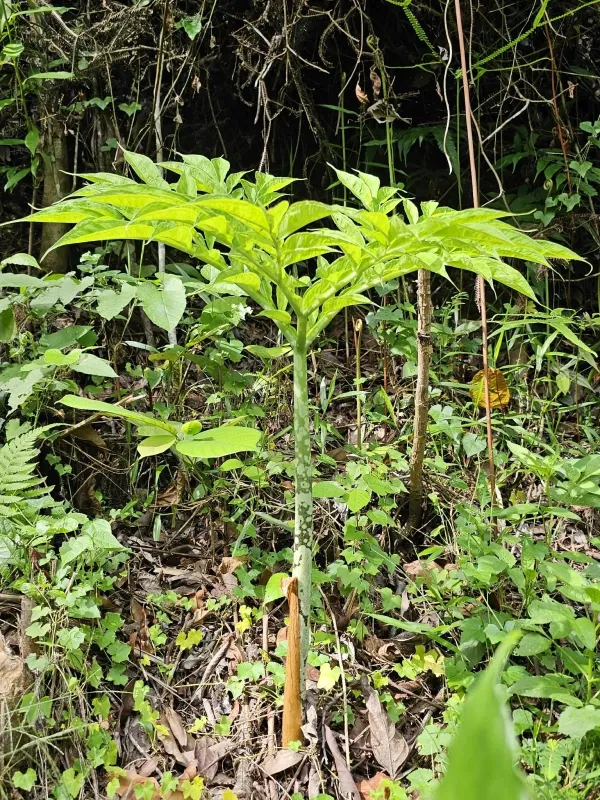
Description
Sowing dates
Amorphophallus paeoniifolius, commonly referred to as elephant foot yam, is a member of the Araceae family. This tropical crop is primarily propagated through vegetative means, utilizing cormels or sections of mature corms that possess viable growth buds.
Planting typically occurs at the onset of the rainy season or when soil temperatures consistently exceed 20°C. Tubers are buried at a depth of 10 to 15 centimeters, depending on their size, to ensure optimal moisture retention during the early stages of establishment.
The spacing between plants must be sufficient to allow for the development of a large, singular compound leaf, which is characteristic of this species. Proper spacing prevents overcrowding and encourages maximum tuber growth.
It is essential to select healthy, disease-free planting material. The presence of well-defined buds is critical for ensuring rapid sprouting once the environmental conditions become favorable for growth.
In industrial farming, the selection of superior clones that exhibit high tuber weight and uniform growth is a standard practice to maximize output per hectare throughout the growing season.
Growing requirements
This crop thrives in warm, humid tropical climates and requires well-drained, fertile soil rich in organic matter. Sandy loams or alluvial soils are preferred, as they allow for easy tuber expansion and proper aeration.
Temperatures ranging from 25°C to 35°C are ideal for consistent growth. The plant is highly sensitive to cold, and temperatures dropping below 15°C can cause dormancy or severely stunt its development.
Adequate water supply is crucial during the active vegetative phase, particularly when the plant is developing its foliage. However, consistent drainage is vital to prevent root and tuber rot, which are common in waterlogged soils.
Regular applications of manure or compost are highly beneficial for achieving high yields. The plant is a heavy feeder, and maintaining soil fertility with organic fertilizers significantly improves the final weight of the tubers.
While the plant can tolerate partial shade, it performs best in full sunlight or areas with light, dappled shade. Ensuring proper light exposure during the peak of the season is essential for efficient carbohydrate synthesis.
Yield
The yield potential of elephant foot yam is significant, with mature tubers often weighing between 5 and 15 kilograms. Under exceptional agricultural conditions and long growing seasons, some tubers can grow even larger.
The crop is highly valued for its edible corms, which serve as a staple carbohydrate source in many Asian countries. The tubers are rich in starch, fiber, and essential minerals, contributing to food security in tropical regions.
The food processing industry utilizes the tuber's glucomannan content, a powerful dietary fiber and natural thickener. This derivative is in high demand globally for both food production and nutritional supplements.
Medicinal applications of the plant are widespread in traditional systems, where it is used to manage metabolic issues. Studies have highlighted its potential in supporting blood sugar regulation and cardiovascular health.
Economically, this crop is considered a resilient and profitable alternative for farmers operating in diverse tropical environments, capable of maintaining productivity even on moderately degraded land.
Main diseases and pests
Fungal diseases such as soft rot (caused by Rhizoctonia or Fusarium species) represent the most significant threat to yield. These pathogens thrive in damp, poorly drained soils and can quickly destroy a standing crop.
Soil-borne pests, including nematodes and various larvae, pose a constant danger to the tubers. Implementing proper crop rotation and soil sterilization techniques is essential for preventing long-term infestations.
Mechanical injuries sustained during tillage or harvest often serve as entry points for bacterial infections. Careful handling is required to keep the skin of the tuber intact, which acts as a protective barrier during storage.
Leaf-eating caterpillars can sporadically impact the photosynthetic efficiency of the plant. While generally not fatal to the tuber, severe defoliation can lead to significantly reduced final yields if not addressed.
Integrated pest management strategies, focusing on the use of clean planting stock and maintaining proper field hygiene, are the most effective ways to mitigate the risks posed by these threats.
Harvesting
The harvest phase begins when the plant's foliage turns yellow and collapses, signaling that the vegetative growth phase is complete and nutrients have been successfully stored in the corm.
Tubers should be lifted carefully from the soil using appropriate tools, such as forks, to avoid piercing or bruising. Any wound caused during this process dramatically shortens the post-harvest shelf life.
Once harvested, the tubers must be cleaned and air-dried in a shaded, well-ventilated area for several days. This curing process allows the skin to harden and improves the resistance to storage pathogens.
For storage, the tubers require cool, dry conditions with temperatures between 10°C and 15°C. High humidity levels should be avoided to prevent rot and to delay the start of the next growing cycle.
Small daughter cormels are typically sorted out and saved for the next planting cycle. This ensures the continuity of the farm's production while maintaining the quality of the selected genetic stock.