
Deutzia vilmorinae
Deutzia vilmorinae
Description
Growing requirements
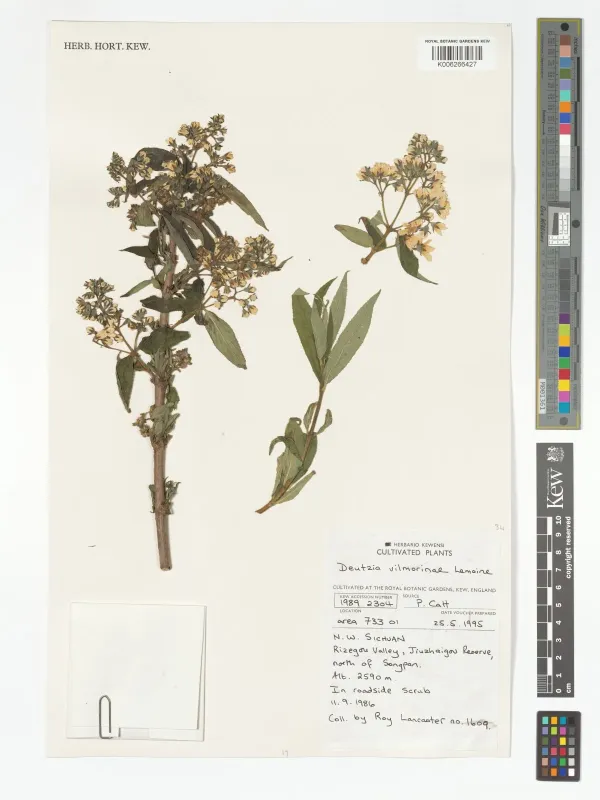
Deutzia vilmorinae is a deciduous ornamental shrub belonging to the Hydrangeaceae family. Native to the mountainous regions of China, this plant is highly valued in horticulture for its spectacular spring bloom and graceful habit.
The shrub typically reaches a height of 2 meters. Its branches have a tendency to arch over time, covered in attractive lanceolate leaves that provide a lush texture to the garden landscape throughout the growing season.
For optimal growth, Deutzia vilmorinae requires a sunny to partially shaded position. It thrives in fertile, moist, and well-drained soils. Ensuring good drainage is critical, as the roots are sensitive to waterlogging during dormant periods.
Standard agrotechnical practices involve regular watering during dry spells and annual fertilization to support vigorous growth. Pruning should be performed immediately after flowering to stimulate the development of new, healthy wood for the following season.
In terms of climate, it prefers temperate zones. While relatively hardy, it is recommended to provide mulch around the base to protect the root system from deep frosts, especially in young plants during their first years of cultivation.
Main diseases and pests
Aphids are the most common pests associated with Deutzia, often targeting the soft, succulent growth of the plant in spring. Infestations can be managed with insecticidal soaps or systemic treatments if the population becomes significant.
Leaf spot diseases may occur in areas with poor air circulation or consistently high humidity. Maintaining proper spacing between shrubs and pruning to open the center of the crown helps to minimize the risk of fungal development.
Spider mites might pose a threat during hot, dry summer months. Regular observation of the foliage and misting can help deter these pests, with specialized miticides used only when infestation thresholds are exceeded.
Powdery mildew can occasionally appear on the leaves as a white, dusty layer. This is primarily a cosmetic issue but should be addressed with appropriate fungicides to ensure the plant maintains its ornamental vigor.
Root rot is a potential risk in poorly drained garden sites. To prevent this, it is essential to ensure that the planting site has been properly amended with organic matter and gravel to facilitate excess water drainage.