
Deutzia maximowicziana
Deutzia maximowicziana
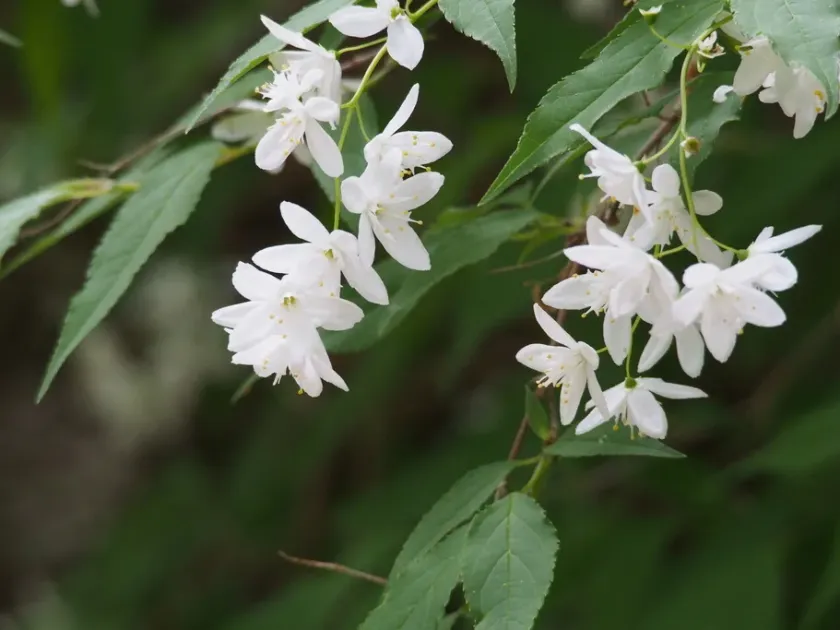
Description
Growing requirements
Deutzia maximowicziana is an ornamental deciduous shrub belonging to the Hydrangeaceae family. Native to East Asia, it is recognized for its graceful growth habit and attractive white blossoms.
The plant thrives in well-drained, fertile soil with moderate moisture levels. It does not tolerate waterlogging, so choosing a planting site with good drainage or amending heavy clay soils is essential for healthy development.
Optimal growth is achieved in sunny locations, although the shrub appreciates afternoon shade in regions with intense summer heat to prevent foliage scorching.
Regular maintenance involves annual pruning immediately after flowering. This process encourages new growth and maintains the shrub's shape, ensuring the bush remains dense and produces abundant flowers in the following season.
The cultural use of this species is primarily focused on aesthetic landscaping. It is highly valued for its mass planting potential, use in shrub borders, and as a focal point in spring-blooming garden designs.
Main diseases and pests
Deutzia species are generally robust, yet they may suffer from powdery mildew if air circulation within the shrub is poor or humidity levels are excessively high.
Common insect pests include aphids and leaf-eating beetles, which may feed on fresh spring shoots, potentially impacting the visual appeal of the foliage.
Cultural prevention techniques, such as proper spacing and thinning out old branches, remain the primary defense against most biological threats.
If chemical intervention is necessary, the use of targeted fungicides should be prioritized to treat fungal spots or mildew without disrupting local pollinators.
Monitoring the plant during the early growth stage is crucial, as early detection of pests allows for effective treatment using simple organic or standard insecticide soaps.