
Detarium senegalense
Detarium senegalense
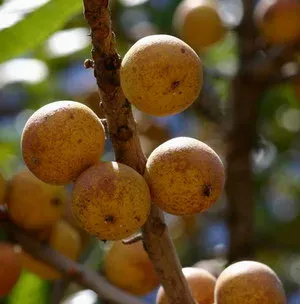
Description
Sowing dates
Propagation of Detarium senegalense is typically performed by seeds, which require specific preparation due to their hard outer coat.
Seed scarification is highly recommended to improve water absorption and ensure uniform germination rates for nursery production.
Sowing should ideally take place at the beginning of the rainy season when soil moisture levels are conducive to rapid root development.
Seedlings should be nurtured in pots with a nutrient-rich growing medium, providing light shade to protect them from harsh sunlight.
Transplanting into the field is generally executed when the seedlings reach a height of 30–50 cm, ensuring they are robust enough to withstand environmental conditions.
Growing requirements
Detarium senegalense is a member of the Fabaceae family, often growing as a large, drought-tolerant tree in tropical landscapes.
The tree performs best in well-drained, sandy-loam soils, as it is sensitive to waterlogging, which can cause root rot.
It thrives in tropical climates characterized by distinct wet and dry seasons, exhibiting great resilience during periods of low rainfall.
This species requires full sun exposure to maintain high productivity and structural integrity of its canopy throughout its lifecycle.
Optimal temperatures for the growth of this species range from 20 to 35 degrees Celsius, typical of its native West African habitat.
Yield
The fruits of Detarium senegalense are highly valued for their nutritious pulp, which serves as a significant food source for local communities.
The timber produced by this tree is dense, durable, and resistant to wood-boring insects, making it excellent for construction and cabinetry.
Various parts of the plant, including leaves and bark, are traditionally used in herbal medicine for their anti-inflammatory properties.
The tree plays a vital role in soil fertility management, as it is capable of nitrogen fixation, aiding the surrounding ecosystem.
As the tree matures, it provides consistent annual yields, provided that it receives adequate care and management in an agroforestry setting.
Main diseases and pests
Fungal infections are among the most common threats to the tree, particularly when humidity levels are excessively high or airflow is restricted.
Young plants may be susceptible to defoliation by various insect pests, which can hinder their early growth if not properly managed.
Mature trees may occasionally be attacked by wood-boring beetles that compromise the trunk, requiring careful monitoring and sanitation.
Competition from invasive weeds during the seedling stage can significantly reduce survival rates, necessitating clean cultivation practices.
Integrated pest management strategies are crucial for maintaining healthy plantations, emphasizing regular tree inspection and sanitation pruning.
Harvesting
The harvesting of Detarium senegalense fruits occurs when they reach full maturity, indicated by specific changes in skin texture and firmness.
Careful manual collection is necessary to avoid damaging the branches, which can lead to sites for infection and reduced future yields.
Harvested fruits are typically dried in cool, shaded areas to ensure longevity and prevent the growth of mold or fermentation.
Post-harvest handling involves sorting the produce by size and quality to optimize market value and maintain freshness during storage.
Efficient harvesting techniques contribute significantly to the overall economic sustainability of maintaining these valuable tropical trees.