
Desmazeria philistaea
Desmazeria philistaea
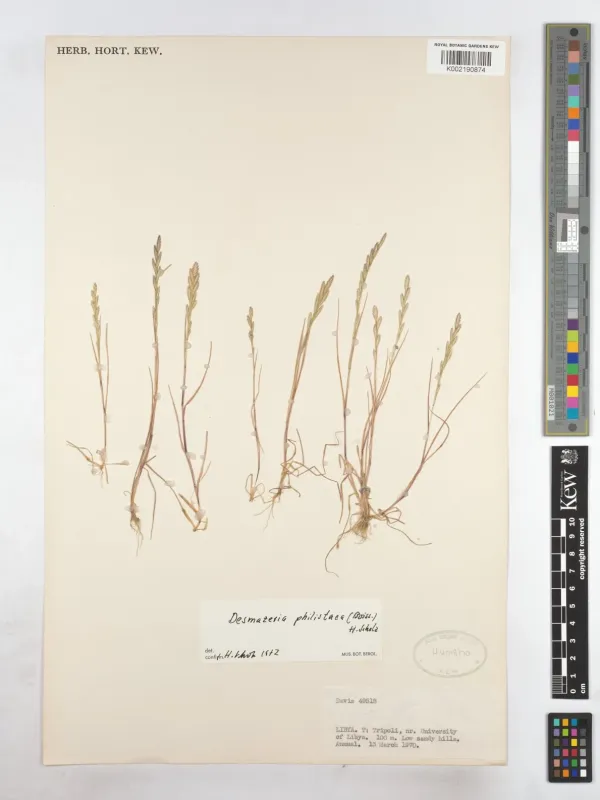
Description
Sowing dates
Desmazeria philistaea is a wild grass species, and therefore lacks standardized commercial sowing protocols. In its natural Mediterranean habitat, seeds germinate during the rainy season, typically starting in autumn.
For cultivation purposes, seeds should be sown in a well-drained substrate. The ideal timing is late autumn, allowing the seedlings to establish a root system before the onset of the harsh, dry summer heat.
Seed depth should be kept shallow, approximately 0.5 to 1 cm. Deeper sowing can inhibit the emergence of small-seeded grass varieties, leading to poor establishment rates in the field.
When used for sand dune restoration, broadcast seeding is common. This method mimics natural dispersal patterns and helps create a patchy yet effective cover that stabilizes moving sands.
Adequate soil moisture is critical during the initial germination phase. Once established, the seedlings exhibit remarkable resilience to drought, reducing the need for post-sowing irrigation.
Growing requirements
As a member of the Poaceae family, Desmazeria philistaea is highly adapted to semi-arid climates. It is frequently found in coastal environments, demonstrating high salt tolerance and an ability to thrive in sandy substrates.
The species requires full sun exposure for optimal growth. Shaded conditions lead to weak stems, sparse leaf development, and significantly reduced seed production throughout the growing season.
Soil requirements are relatively modest. The plant prefers loose, sandy, or rocky soils with good aeration. It performs poorly in heavy clay or compacted soils where oxygen exchange is restricted.
Temperature tolerance is a hallmark of this plant. It is evolved to survive the mild, wet winters of the Levant and the intense, arid conditions of the summer, displaying a clear dormancy phase.
Nutritional needs are minimal compared to typical agricultural crops. Excessive nitrogen application can actually harm the plant, making it more susceptible to lodging and fungal infection.
Main diseases and pests
Fungal diseases such as rust and powdery mildew pose the most significant threat during periods of unexpected high humidity or prolonged spring fog, which can stifle plant respiration.
Insects like aphids and grasshoppers may feed on young, succulent shoots. While mature plants are often resistant, severe outbreaks can damage the reproductive organs, impacting seed yield.
Root rot, driven by stagnant water in poorly drained soil, is the leading cause of mortality in cultivated environments. Ensuring adequate drainage is the primary defense against this pathogen.
Overgrazing by domestic livestock is a major environmental threat to natural stands. Intensive trampling destroys the delicate root architecture that holds the sand in place, leading to soil erosion.
Invasive species may compete with Desmazeria philistaea for space and water. Maintaining a clean seedbed and removing aggressive weed competitors is essential for successful establishment.