
Derris trifoliata
Derris trifoliata Lour.
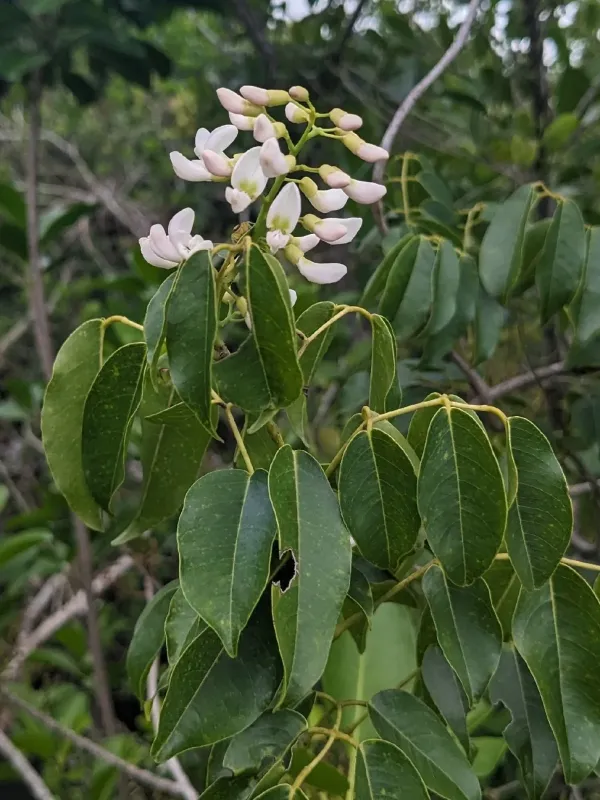
Description
Growing requirements
Derris trifoliata is a woody climbing vine belonging to the Fabaceae (legume) family, naturally occurring in mangrove environments and tropical coastal regions. This plant is well-adapted to saline conditions and is frequently found in brackish swamp habitats throughout South and Southeast Asia, as well as parts of Australia.
The plant thrives in tropical climates characterized by high humidity and consistent temperatures. It requires a significant amount of rainfall or regular irrigation, as it does not tolerate extended drought periods, despite its natural resilience to saline inundation.
Soil requirements for Derris trifoliata include well-draining, nutrient-rich substrates, often alluvial or sandy loams found near water bodies. The plant needs partial to full sun exposure, provided that air moisture is maintained, which facilitates the vigorous development of its extensive root systems.
Botanically, the plant is distinguished by its compound leaves and long, flexible stems that exhibit climbing behavior. It is a perennial species, meaning that once established in a suitable microclimate, it can continue to yield harvestable roots for many years.
Agricultural management of this crop involves ensuring appropriate spacing between individual plants to prevent competition for light and nutrients. Regular weeding during the early stages of establishment is crucial to protect the slow-growing seedlings from being overwhelmed by more aggressive vegetation.
Harvesting
The primary agricultural utility of Derris trifoliata is the extraction of rotenone, a natural insecticide derived from its roots and stems. Harvesting typically occurs once the plant has matured, usually between three and five years of age, to ensure optimal concentration of the active ingredients.
The harvesting process involves digging up the root system with minimal damage to the soil structure. Once harvested, the roots must be carefully cleaned of debris and then dried in a shaded, well-ventilated area to preserve the chemical potency of the rotenone content.
It is critical to manage the drying process properly, as exposure to direct sunlight and high temperatures can significantly degrade the insecticide's effectiveness. Once fully dried, the roots are often ground into a fine powder or processed into extracts for various agricultural applications.
Safety is a major priority during harvest, given the inherent toxicity of the plant. Rotenone is highly toxic to fish and some aquatic invertebrates, requiring strict handling protocols to ensure that neither dust nor plant runoff contaminates nearby natural water sources.
With the global shift towards integrated pest management and organic agriculture, Derris trifoliata remains a relevant species. Its roots are processed for use as a biodegradable pesticide that breaks down quickly in the environment, making it a preferred alternative to synthetic chemicals.