
Dendrophylax porrectus
Dendrophylax porrectus
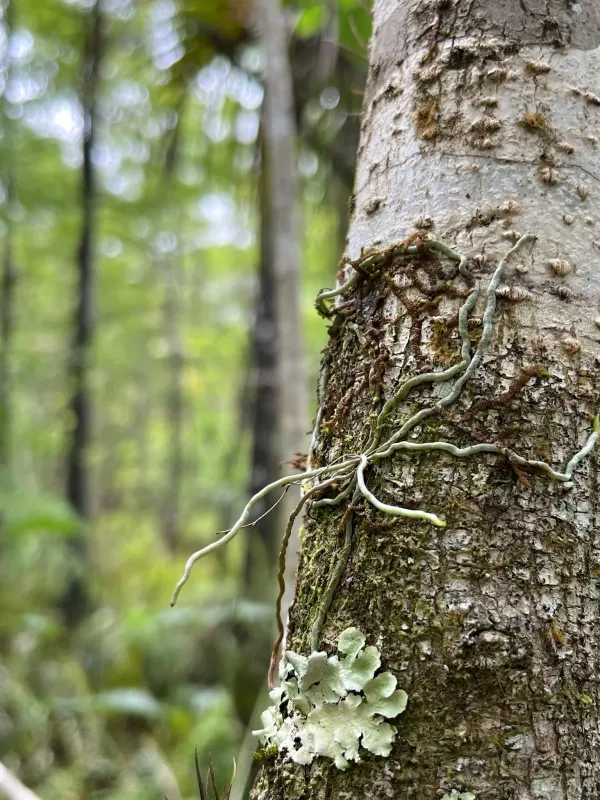
Description
Growing requirements
Dendrophylax porrectus is a unique member of the Orchidaceae family, commonly referred to as a leafless orchid. While it does not serve as a standard agricultural crop, it is highly regarded in the field of rare plant conservation and is a subject of specialized botanical interest due to its evolutionary adaptations.
The native distribution of this species is centered in the subtropical regions of Florida and parts of the Caribbean. It thrives as an epiphyte, colonizing tree bark in humid environments. The plant is perfectly adapted to existence without soil, relying entirely on aerial root structures for gas exchange and nutrient absorption.
Botanically, the species is defined by the absence of leaves. The roots are flattened, green, and contain chlorophyll, effectively taking over the photosynthetic role. This adaptation is a survival strategy that reduces water loss in the hot, humid environments where the species naturally flourishes.
The environmental requirements for Dendrophylax porrectus are precise and demanding. It requires a high humidity level, typically maintained above 75 percent, and consistent airflow to prevent the roots from remaining excessively wet for too long. Light levels must be indirect and diffused to prevent scorching of the specialized roots.
In a controlled setting, cultivation involves mounting the plant on natural substrates like tree fern fiber or cork bark. Soil-based mediums are strictly avoided. Proper care relies on a consistent irrigation schedule using purified water to avoid mineral buildup, alongside specialized, weak liquid fertilizer applications.
Main diseases and pests
The primary threats to this species include loss of habitat and the sensitivity of the plants to air pollution. In indoor cultivation, the greatest risks are posed by fungal infections that develop when air circulation is poor, leading to rapid root decay and loss of vigor.
Common pests include scale insects and spider mites, which target the plant roots. Monitoring the root mass regularly is essential for identifying these pests early. Integrated pest management using organic, non-toxic solutions is strongly recommended to protect the delicate physiological structure of the orchid.