
Dendrophylax lindenii
Dendrophylax lindenii
Description
Growing requirements
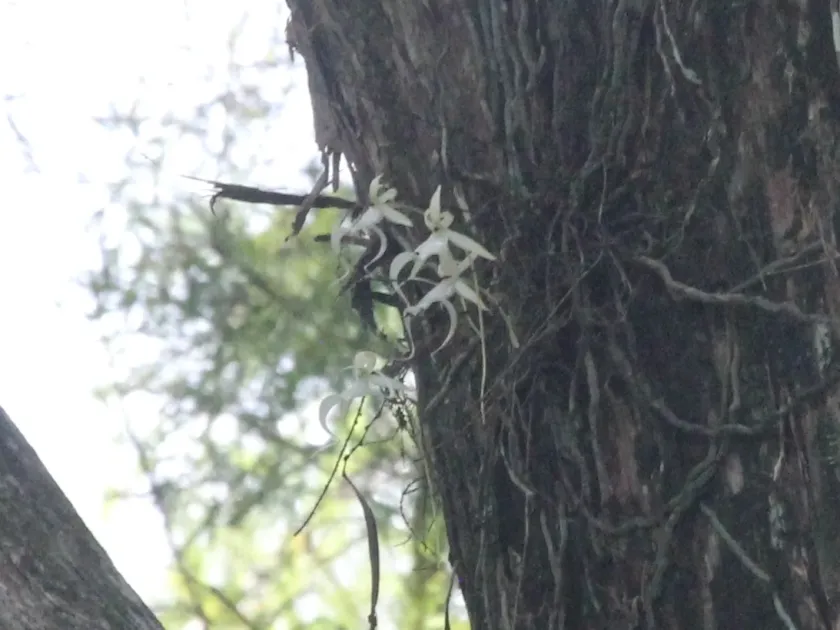
Dendrophylax lindenii, commonly known as the ghost orchid, is a fascinating member of the Orchidaceae family. It is a leafless epiphyte that lacks photosynthetic leaves, relying entirely on its thick, chlorophyll-rich roots to generate energy and absorb nutrients from the environment.
The native habitat of this orchid spans the humid forests of Florida, Cuba, and the Bahamas. In the wild, it grows attached to the bark of hardwood trees, thriving in environments with consistent rainfall and high ambient humidity levels.
Cultivation requirements for this species are notoriously complex. It demands a highly controlled environment with humidity levels consistently above 70–80% and significant airflow to prevent the accumulation of stagnant moisture around the root system.
Temperature management must emulate its tropical origin, with ideal daytime temperatures ranging from 22°C to 28°C. A nocturnal temperature drop is essential for the plant's metabolic cycle and successful maturation of its complex inflorescence.
Regarding cultivation techniques, D. lindenii must be mounted on driftwood or cork slabs. No traditional soil or potting medium is used, as the roots require rapid gas exchange and exposure to the air, coupled with frequent misting using only high-purity water.
Main diseases and pests
Fungal diseases are the primary threat to the survival of D. lindenii in controlled environments. Excess humidity combined with poor air circulation creates the perfect conditions for pathogens to attack the sensitive root cortex, leading to rapid decay.
Pests such as scale insects and spider mites pose a serious risk to the plant's health. Because the orchid lacks leaves to sacrifice, any damage to the roots directly impacts the plant's ability to undergo photosynthesis and store water.
Light intensity management is also critical. While the plant requires bright, filtered light to sustain its photosynthetic processes, direct sunlight can easily lead to thermal damage and dehydration of the succulent root tissues.
The species is extremely sensitive to chemical impurities in irrigation water. Chlorine, heavy metals, and high mineral content in tap water can accumulate in the velamen, causing long-term damage and reducing the plant’s natural defenses.
Due to its rarity and specific ecological needs, habitat loss and illegal poaching are the greatest external threats. Preservation efforts focus on maintaining clean water sources and ensuring that the microclimate in its natural range remains stable and undisturbed.